






Common Coil Fouling Signs in a V-Type Condenser and What They Mean
What usually shows up first when a V-Type Condenser coil starts fouling?
In field service, the first sign is rarely a dramatic failure. A V-Type Condenser usually starts talking through performance drift: head pressure runs higher than normal for the same ambient condition, fan cycling becomes less stable, compressor discharge temperature tends to creep up, and condensing time gets longer. If the site operator says, “The system still runs, but it feels heavier,” that often points to coil contamination before anything else.
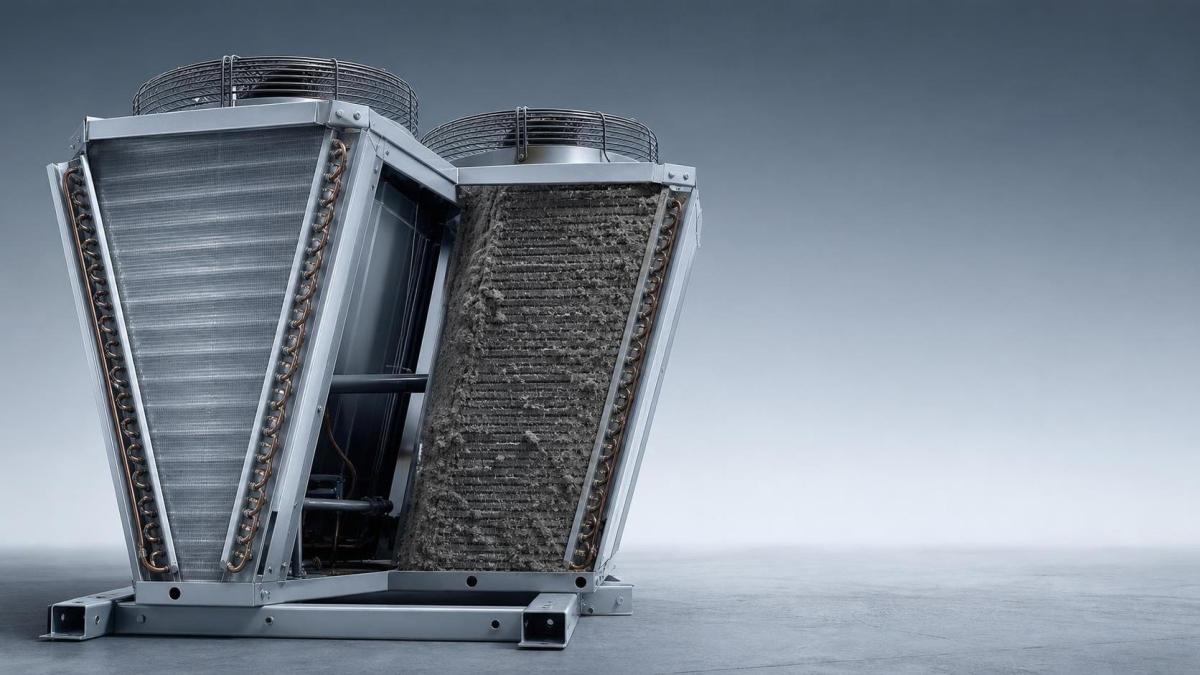
Because of the V-shaped coil arrangement, airflow restriction does not always affect both sides evenly. One face may load up with dust, grease, fibers, cottonwood, or packaging debris faster than the other. That creates a partial heat rejection problem, which is easy to miss if you only read the gauges and skip the visual inspection.
If head pressure is rising, does that automatically mean the coil is dirty?
No. A dirty coil is a common cause, but not the only one. For after-sales maintenance staff, the useful question is whether the head pressure increase matches the rest of the evidence. On a fouled V-Type Condenser, you often see a combination of signs instead of a single abnormal reading.
- Higher condensing pressure than the unit normally carries under similar load and weather
- Noticeable temperature difference between cleaner and dirtier coil sections
- Reduced or uneven airflow through the coil faces
- Fan motors running longer without bringing pressure down efficiently
- Visible blockage on fin surfaces, especially on the air inlet side
If the pressure is high but the coil is clean, look next at fan rotation, fan speed, ambient recirculation, non-condensables, refrigerant charge condition, and any physical fin damage. Fouling should be confirmed, not assumed.
What does uneven airflow across the V-Type Condenser actually tell you?
Uneven airflow usually means the coil is not loading evenly, or one part of the air path has become restricted. On a V-type layout, this matters more than many technicians expect. If one side breathes freely and the other side is packed with dust or greasy lint, the system may still run, but heat rejection becomes unbalanced. That can lead to false impressions during diagnosis, especially when only one fan bank or one coil face gets checked.
A quick field check is simple: compare suction feel, airflow pull, visible fin condition, and surface temperature pattern on both coil faces. If one side is clearly weaker, do not stop at “clean the coil.” Find out why contamination is building unevenly. Nearby loading doors, forklift traffic, carton debris, and poor air circulation around the unit are common contributors.
Can you judge fouling just by looking at the fins?
Sometimes yes, but not reliably in every case. Dry dust and fiber buildup are easy to spot. Grease film, sticky residue, and embedded fine particles are trickier because the coil may look only slightly dirty while airflow is already badly affected. A coil face that appears gray, matted, or patchy usually deserves a closer check.
What matters is not just what sits on top of the fin pack, but what has been pulled into it. If light does not pass through the fin area well, or if debris is concentrated in corners and lower sections, heat transfer is already being compromised. On outdoor units, one side may also collect more airborne dirt depending on wind direction and site layout.
When does coil fouling become a real risk to compressors and system reliability?
It becomes serious when the dirty coil stops being an efficiency issue and starts pushing operating conditions outside the system’s comfortable range. Persistent high condensing pressure raises compressor workload. Discharge temperature can climb, oil condition may suffer, protective trips may become more frequent, and capacity drops at the same time the machine is working harder.
For service teams, the practical warning sign is repeat behavior. If the unit returns to high-pressure operation shortly after reset, or if summer performance falls off faster than expected even though refrigerant charge appears stable, coil fouling should move high on the list. Leaving it too long usually turns a simple cleaning visit into a deeper service call.
What is the right inspection sequence before deciding to clean the coil?
A good inspection is short, but it should be disciplined. The goal is to confirm that fouling is the cause, estimate severity, and avoid missing another fault beside it.
- Record operating pressure and ambient condition.
- Check fan operation, direction, and any obvious speed mismatch.
- Inspect both coil faces, not just the easiest side to reach.
- Look through the fin pack for embedded dirt, oil film, or flattened areas.
- Check for airflow recirculation or blocked clearances around the unit.
- Compare coil condition with the site environment: dust, grease, packing fibers, traffic, or door opening frequency.
That last point gets ignored a lot. In cold storage facilities and logistics warehouses, frequent movement through doorways changes the air and debris load around condensers. In some layouts, improving traffic flow and sealing losses helps reduce how fast the coil gets dirty. That is where components such as Double-acting Impact Door can support the broader cold-room environment by allowing bidirectional passage, quick reset after impact, and insulated closure without occupying extra passage space.
What cleaning mistakes cause more trouble than the dirt itself?
The big one is using too much pressure and folding the fins. Once the fin pack is deformed, airflow loss may remain even after the coil looks clean. Another common mistake is washing only the surface layer from the outside while leaving compacted material deeper in the coil.
A few field habits are worth keeping:
- Use a cleaning method suited to the contamination type, especially when grease is involved.
- Protect motors and electrical parts from unnecessary water exposure.
- Clean in a direction that helps push contamination out of the fin pack rather than deeper into it.
- Recheck airflow and operating pressure after cleaning instead of assuming the job is finished.
How do you tell the difference between normal dirt and a maintenance interval that is too long?
Normal dirt does not usually change system behavior much between routine inspections. An overdue interval shows up when contamination has clearly crossed from cosmetic to functional. The best way to judge that is by combining appearance with operation:
If the same V-Type Condenser fouls quickly after every cleaning, stop treating it as a cleaning-only problem. Review placement, airborne contaminants, traffic pattern, and whether nearby cold-room access points are increasing warm air and debris movement more than expected.
What should be written in the service record after a fouling-related call?
A useful record should let the next technician understand both condition and cause. Note the observed symptoms, which coil face was more affected, the contamination type, fan condition, whether fins were damaged, what cleaning method was used, and how the operating condition changed afterward. If the site has repeating contamination sources, record them clearly.
That level of detail matters. It helps distinguish “coil got dirty again” from “the unit is installed in a contamination-heavy area and needs a different maintenance rhythm.”
What is the most practical rule for after-sales teams?
Do not judge a V-Type Condenser by pressure alone or by appearance alone. Read the operating symptoms, inspect both coil faces, and relate what you find to the site environment. When rising head pressure, uneven airflow, and visible blockage show up together, the coil is no longer just dirty. It is already affecting reliability, and that is the moment to act before the compressor pays for the delay.
CHAIDONG
Professional generator set manufacturer
24/7 before-sales and after-sales services
Comprehensive technical support