






Quick-Freezing Cold Room Frost Buildup: Causes, Risks, and Remedies
Why does frost build up so fast in a quick-freezing cold room?
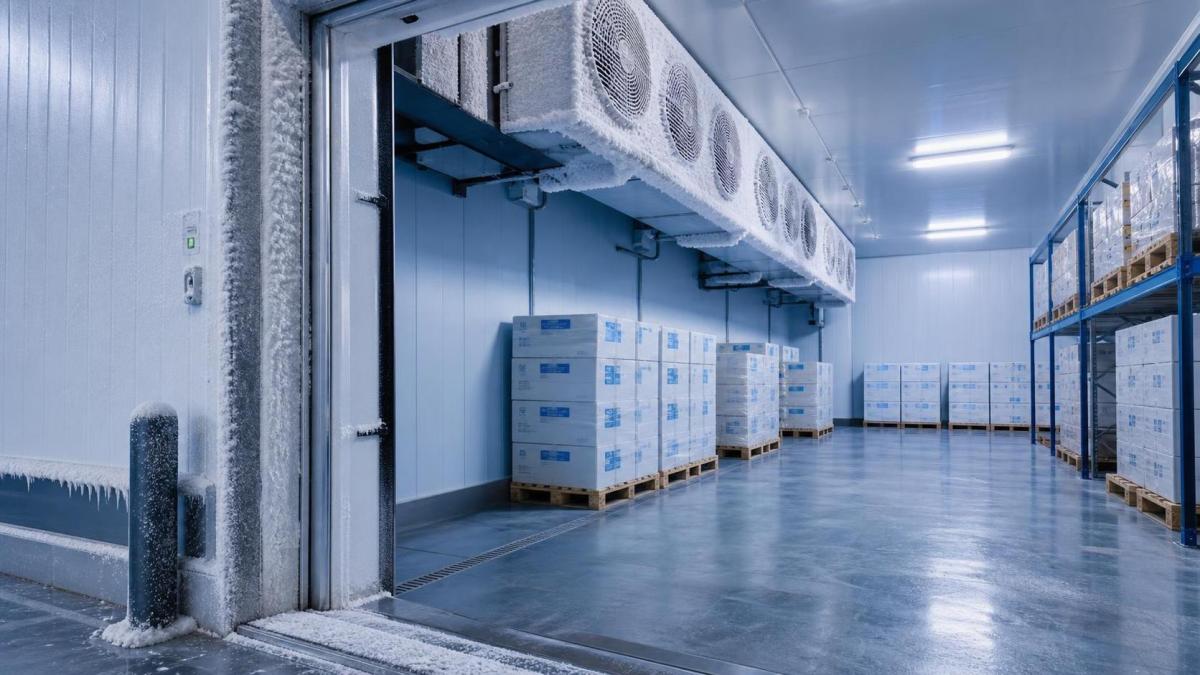
In a quick-freezing cold room, frost is usually a moisture problem before it becomes an ice problem. Warm, humid air enters the room, touches cold surfaces such as the evaporator coil, fan guard, ceiling joints, or door frame, and the moisture freezes almost immediately. Because quick-freezing rooms run at lower temperatures and often deal with frequent loading, the buildup can happen much faster than operators expect.
The most common triggers are simple: doors opening too often, damaged door gaskets, workers moving product in and out during humid weather, poor drainage after defrost, and evaporator airflow being blocked by cartons or overstacked goods. If frost keeps returning to the same area, that location usually tells you where the moisture is entering or where heat exchange is being disrupted.
Is a thin layer of frost normal, or is it already a warning sign?
A light, even layer on some cold surfaces can be normal during operation. Thick, uneven, or fast-growing frost is not. Operators should pay attention when frost starts to bridge coil fins, gather around fan inlets, thicken on the door frame, or reappear shortly after defrost. That is no longer cosmetic. It means airflow, sealing, drainage, or defrost control needs attention.
A practical rule on site is this: if frost changes how the room breathes, drains, closes, or freezes product, treat it as a fault, not normal operating residue.
What problems can frost actually cause for daily operation?
The first hit is usually performance. Frost acts like insulation on the evaporator, so the system removes heat less efficiently. That means longer pull-down time, slower freezing, more compressor runtime, and higher power use.
Then the knock-on effects show up:
- fans may lose airflow or start icing around the guard and motor area;
- temperature uniformity gets worse, especially in corners or behind dense stacks;
- floor ice increases slip risk and slows handling;
- product surface quality can suffer if freezing becomes uneven;
- doors may stop sealing properly, which feeds the problem further.
In other words, frost buildup in a quick-freezing cold room rarely stays a minor maintenance issue for long.
Where should operators check first when frost appears?
Start with the easy, high-probability points before assuming a refrigeration component failure. A short inspection routine usually tells you a lot.
- Check the door seal for gaps, tears, or compression loss.
- Look at door opening frequency and how long the door stays open during loading.
- Inspect the evaporator face for blocked fins, uneven icing, or reduced fan throw.
- Confirm the drain line is clear and not refreezing after defrost.
- Review product stacking. Goods pushed too close to the unit can choke circulation.
- Check whether recent weather or washdown introduced extra humidity.
If the frost pattern is concentrated on one side of the coil or around one opening, that pattern often points to the source faster than instrument readings alone.
Can defrost settings be the real cause?
Yes, very often. A cold room can have decent hardware and still ice up because the defrost schedule does not match the workload. In quick-freezing use, the moisture load changes with shift timing, product temperature, packaging condition, and room traffic. A schedule that worked in a low-traffic period may be too light during peak operation.
Operators should look for these signs: frost returning before the next scheduled defrost, water not draining completely after defrost, or coil sections staying partially iced. That usually means the frequency, duration, or termination point needs adjustment. The goal is not “more defrost at all times.” Too much defrost wastes energy and can disturb room stability. The right setting is the one that clears accumulated frost without overheating the room or leaving meltwater to refreeze.
What is the safest way to remove heavy frost once it has already built up?
Do not chip it off with sharp tools. That is how fins bend, coils get punctured, and door frames get damaged. The safer approach is controlled defrost, drainage check, and cleaning after the ice softens.
If the buildup is severe, move product if needed, run a full defrost cycle, clear the drain path, remove loosened ice carefully, and dry wet areas before restarting normal operation. After that, watch the same area over the next shift. If frost returns quickly, removal was only the symptom treatment. The moisture source is still there.
Does room design affect frost control?
Absolutely. Frost control becomes easier when the cold room layout matches the product flow and temperature duty. For example, a room serving frozen meat, seafood, or prepared foods at low-temperature storage conditions needs more than just low setpoint capacity. Air circulation paths, panel sealing, door selection, zoning, and loading workflow all matter.
In facilities that need different storage or turnover patterns, a modular solution such as Conventional Prefabricated Cold Storage Facility can help by allowing sizing, wall thickness, and temperature range to be matched to the site and the stored product category. That is useful in supermarkets, food processing plants, seafood wholesale markets, and distribution centers where poor room matching often leads to repeated icing and unstable operation.
Are certain operating habits making the problem worse?
Yes, and these habits are common because they save a few minutes in the moment while costing far more later. Leaving the door open during sorting, placing warm incoming product directly in a crowded room, stacking cartons against the evaporator discharge path, and skipping cleanup of meltwater all encourage frost growth.
One more overlooked issue is packaging condition. Wet cartons, unwrapped trays, and product with exposed surface moisture raise the humidity load fast. Operators often blame the machine first when the real problem started at receiving or staging.
When should you suspect equipment sizing or configuration, not just maintenance?
If frosting keeps happening despite clean coils, working fans, proper defrost, and disciplined door management, step back and review the original setup. Check whether the room is being used for a heavier turnover than planned, whether the stored product has changed, and whether the temperature target fits actual quick-freezing duty.
Some sites start with a room sized for general frozen storage and later use it like a high-traffic quick-freezing cold room. That shift increases moisture entry and heat load. For freeze-type storage applications, cold rooms in the -25°C to -18°C range may also need layout and airflow decisions that differ from preservation rooms. When the duty changes, the room configuration may need to change with it.
What can operators do this week to reduce frost without a major retrofit?
Focus on a short control list that can be enforced immediately:
- limit door-open time and group loading tasks;
- replace worn gaskets and inspect closing alignment;
- keep clearance around evaporators and air return paths;
- make sure defrost water leaves the room and does not refreeze nearby;
- separate warm incoming goods from already frozen stock when possible;
- log where frost appears, not just that it appears.
That last point matters. Location, timing, and repeat pattern usually tell you whether the issue is infiltration, airflow, drainage, or settings. Once that is clear, the fix becomes much more precise.
The best rule for frost control is straightforward: do not judge the room by temperature display alone. If doors leak, airflow is blocked, or moisture stays inside after defrost, a quick-freezing cold room can hold a low reading while still performing badly. Watch the frost pattern, tie it to daily operating habits, and correct the source before it turns into lost freezing capacity and avoidable downtime.
CHAIDONG
Professional generator set manufacturer
24/7 before-sales and after-sales services
Comprehensive technical support