






What Food Safety Standards Apply to a Quick-Freezing Cold Room?
Which food safety standards matter most for a quick-freezing cold room?
For quality control and safety managers, the real question is not whether a quick-freezing cold room is cold enough. It is whether the room can freeze product fast, hold temperature consistently, stay cleanable, and support the records your audit team will actually need. Food safety in this context usually sits at the intersection of hygienic design, process control, material compliance, and traceable documentation.
In practice, the applicable standards often come from several layers at once: food facility hygiene rules in your market, HACCP-based controls, equipment electrical and construction compliance, and any customer or retailer standards written into your supply agreement. A quick-freezing cold room is part of the food process, so auditors usually look beyond refrigeration performance alone.
Is there one universal standard for a quick-freezing cold room?
No. There is no single global rulebook that covers every quick-freezing cold room in the same way. What applies depends on where the room is installed, what food is handled, whether the room is used for raw or ready-to-eat products, and whether the cold room is part of processing, storage, or logistics.
That said, most buyers and auditors evaluate the same core points:
- Surfaces in contact zones or splash zones must be cleanable and resistant to corrosion.
- Insulation, joints, doors, drains, and flooring must not create hidden contamination traps.
- Temperature must be measured, controlled, and recorded.
- Cleaning and defrost procedures must not expose product to contamination.
- Maintenance activity must be managed so lubricants, condensate, rust, or damaged parts do not affect food safety.
If your facility is certified under a food safety management system, the cold room also has to fit that system's hazard analysis and verification routines.
What should QC teams check in the room’s materials and hygienic design?
Start with the parts that are hardest to clean after installation. That is where nonconformities usually hide.
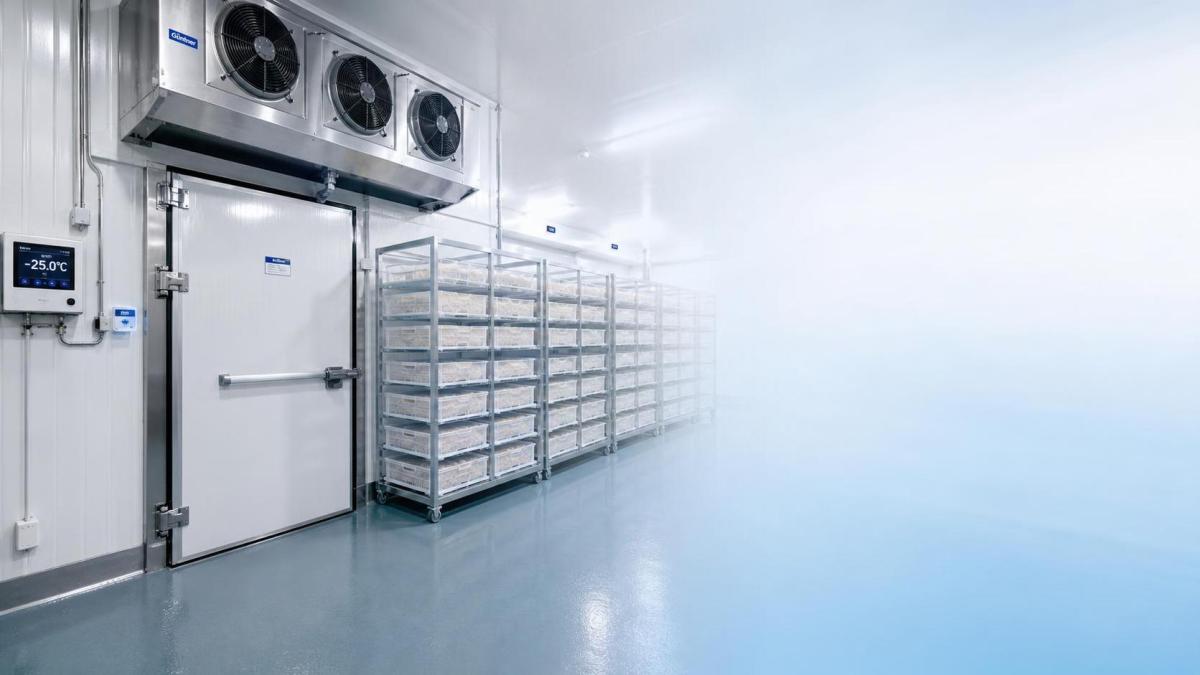
For a quick-freezing cold room, look closely at panel finishes, internal corners, door frames, seals, ceiling joints, evaporator placement, drainage paths, and floor-to-wall transitions. Surfaces should be smooth, non-absorbent, and durable under repeated washdown and low-temperature cycling. If sealant cracks, if panel joints open slightly, or if door gaskets hold moisture and debris, sanitation performance drops fast.
This is also where material selection matters. Many facilities prefer insulated systems built with polyurethane sandwich panels because they support thermal efficiency, but QC still needs to verify that the exposed finishes and joining details are suitable for the intended cleaning regime and product risk level.
How do you judge whether temperature control meets food safety expectations?
Do not judge it by setpoint alone. Food safety depends on product temperature, freezing rate, temperature uniformity, recovery after door opening, and alarm response.
A room can display an acceptable air temperature and still perform poorly if airflow is uneven or loading blocks circulation. QC and safety managers should ask for:
- Sensor locations and calibration records
- Continuous temperature logging
- High and low alarm settings with response procedures
- Pull-down and recovery performance under normal loading conditions
- Evidence that product core temperature reaches the required target within the validated process window
This is especially important for quick-freezing applications, because the freezing step itself may be part of your hazard control strategy, not just a storage function.
Which documents should be available during an audit or supplier review?
A clean room and a good temperature trend are not enough if the documentation is weak. Auditors typically want to see whether the equipment and the process are both under control.
Are construction certifications the same as food safety compliance?
They are related, but they are not the same thing. Certifications such as CE, UL, LVD, EMC, CB, or ISO 9001 can support confidence in manufacturing, electrical safety, and quality management, but they do not automatically prove that a specific quick-freezing cold room is suitable for your food process.
For food safety review, the better question is: does this equipment configuration support hygienic operation in my use case? A room for packaged frozen goods may be acceptable with a different interior detail level than a room used around exposed food handling. QC teams should separate product certifications from process suitability and verify both.
What mistakes cause the most trouble during inspections?
Three issues come up again and again.
- Temperature mapping was never done under realistic loading, so cold and warm spots were missed.
- Sanitation procedures exist on paper, but evaporators, drains, door tracks, and damaged panel joints are hard to access or not included in verification checks.
- Managers rely on a supplier brochure instead of collecting the actual technical documents, calibration records, and maintenance history auditors ask for.
When those gaps show up together, the room may look operational while still failing a serious food safety review.
Do temporary or mobile cold rooms follow different expectations?
The food safety principles stay the same, but the risk points change. In temporary warehousing, remote operations, transit logistics, or emergency deployment, managers need to pay closer attention to power stability, remote alarm visibility, physical damage during transport, and cleaning access after relocation.
That is why some operators consider modular options such as Containerized Cold Storage, especially when they need a factory-preinstalled refrigeration system, insulated panels, and electrical controls in a unit that can be moved between sites. If you evaluate this type of solution, review the same food safety points you would apply to a fixed room: hygienic finishes, temperature recording, drainage, cleanability, and alarm handling. Mobility is useful, but it does not reduce the documentation burden.
What is a practical approval checklist before putting a quick-freezing cold room into use?
Keep it simple and evidence-based. Before release, confirm these five points:
- The room design matches the food risk and cleaning method.
- Temperature sensors are calibrated and logging is active.
- Loaded performance has been checked, not just empty-room pull-down.
- Cleaning, defrost, maintenance, and alarm-response procedures are documented and trained.
- The technical file contains the drawings, specifications, and service records needed for audit traceability.
A quick-freezing cold room should be approved the same way any critical process equipment is approved: not by nameplate capacity alone, but by whether it can repeatedly protect the product under real operating conditions.
CHAIDONG
Professional generator set manufacturer
24/7 before-sales and after-sales services
Comprehensive technical support