






What Is Refrigeration Equipment and How Does It Support Cold Chain Operations?
What Refrigeration Equipment Really Means in Cold Chain Work
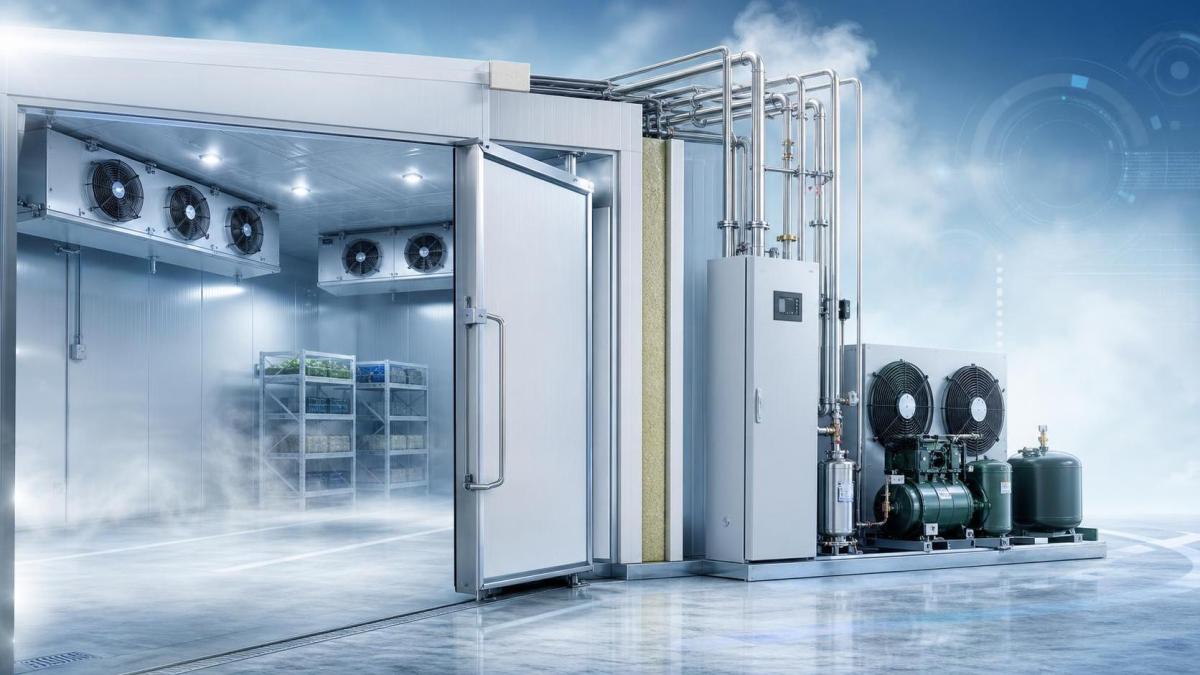
People often use the term Refrigeration Equipment as if it refers to a single machine. In practice, it describes a working system. That system may include an evaporator, condenser, condensing unit, insulated cold room, sandwich panels, cold storage doors, controls, piping, defrost components, and the supporting structure that keeps temperature stable under real operating load. If one part is undersized or poorly matched, the entire cold chain starts to drift, even when the main unit itself looks powerful on paper.
That is the first point worth clarifying: refrigeration in cold chain operations is not only about “making things cold.” It is about holding the right temperature, removing heat at the right rate, managing humidity, limiting frost buildup, and doing all of that continuously while doors open, products move, and ambient conditions change. For operators, this is why system design matters as much as nameplate capacity.
In commercial use, Refrigeration Equipment usually supports three linked tasks. It cools products down to a target range, maintains that range during storage, and helps prevent quality loss during handling or transfer. The exact temperature target depends on the goods. Fresh produce, frozen foods, pharmaceuticals, and chemical materials do not impose the same load profile or humidity requirement. A room holding chilled goods at around 0°C behaves very differently from a freezer operating near -18°C or below. Treating these as the same application is a common mistake.
A practical way to understand the system is to break it into functions rather than into parts lists. The evaporator absorbs heat from the room air. The condenser releases that heat to the outside environment. The condensing unit drives the refrigeration cycle. The insulated enclosure reduces external heat gain. Doors, joints, and panel quality determine how much unwanted load the system must fight every hour. Controls and defrost logic keep performance from deteriorating over time. When operators complain that a cold room “cannot hold temperature,” the root cause is often not one failed component but a mismatch across these functions.
Why Cold Chain Reliability Depends on Matching, Not Just Capacity
Buyers sometimes focus too heavily on cooling capacity in kilowatts and ignore airflow, fin spacing, defrost method, or door-opening frequency. Yet these factors directly affect day-to-day stability. In a high-humidity room, for example, frost can build quickly on the coil surface. Once that happens, heat exchange drops, air circulation weakens, and the room may show uneven temperatures from one end to the other. The equipment is still running, but the cold chain is already under stress.
This is one reason evaporator selection deserves more attention than it usually gets. A ceiling-mounted air cooler used in food refrigeration or controlled-temperature storage is not chosen only by room size. Operators also need to look at operating condition, airflow distance, fan protection level, defrost efficiency, and how the coil design suits the refrigerant and the room duty. A unit such as Commercial Ceiling-Mounted Evaporator 402D illustrates that point well: its published operating conditions cover 0°C, -18°C, and -25°C, while airflow, thawing power, and fin spacing vary with the intended application. Those are not secondary details. They shape how evenly the room cools and how well the system recovers after defrost or door opening.
Some equipment choices also reflect operating discipline. A coil using copper pipe and aluminum fins may deliver strong heat transfer, but if the site has frequent washdown, corrosive exposure, or weak maintenance routines, material protection and drainage design become just as relevant. Defrost design is another example. In low-temperature storage, fast and even defrosting reduces ice accumulation and helps restore airflow sooner. That improves usable performance, not just laboratory performance.
What Operators Should Pay Attention To
From an operator’s perspective, the most useful question is not “What is the best Refrigeration Equipment?” but “What equipment arrangement fits this load and this workflow?” A few checks are usually more revealing than broad product claims:
- Actual storage temperature range, not only target setpoint
- Product pull-down demand versus steady holding demand
- Door opening frequency and infiltration risk
- Humidity sensitivity of stored goods
- Defrost frequency and recovery time
- Energy use under real operating conditions, not ideal conditions
These checks help distinguish a system that merely runs from one that runs cleanly and predictably. In cold chain management, predictability matters because product loss often begins before obvious failure. Temperature fluctuation, uneven airflow, excess dehydration, or repeated icing may not stop operations immediately, but they indicate that the system is carrying hidden risk.
Another misunderstanding is that certified products automatically guarantee field performance. Certifications such as UL, CE, CB, FCC, LVD, EMC, ISO9001, and energy-related approvals matter because they show compliance, safety, quality control, or electrical compatibility within defined scopes. But they do not replace engineering selection or installation quality. A well-certified condensing unit paired with poor insulation, air leakage, or an unsuitable evaporator will still underperform.
The System View Behind One-Stop Cold Storage Solutions
This is where experienced refrigeration manufacturers tend to think differently from simple equipment traders. Companies deeply involved in R&D, manufacturing, and cold storage system integration usually evaluate the relationship between components rather than pushing isolated units. Shandong Boer Refrigeration Equipment Co., Ltd., for example, builds around that system view through product lines such as air coolers, condensers, condensing units, prefabricated modular cold rooms, polyurethane sandwich panels, and cold storage doors. That combination reflects how cold chain projects are actually delivered: structural insulation, refrigeration cycle components, airflow management, and access control all need to work together.
Their manufacturing profile also highlights another industry reality. Cold chain reliability is influenced by process consistency long before the equipment reaches site. Modern production lines, tube expansion equipment, bending automation, foaming systems, and high-precision testing instruments are not marketing decoration. They affect coil integrity, panel quality, fit-up accuracy, and repeatability in batch production. When a supplier exports to multiple markets and holds certifications across major product categories, that usually matters most in consistency and traceability, not in slogans.
For end users, the takeaway is straightforward. Refrigeration Equipment should be understood as the operating foundation of the cold chain, not as a collection of interchangeable boxes. If temperature control is unstable, look beyond compressor power. Check enclosure quality, evaporator suitability, refrigerant matching, airflow organization, and defrost behavior. If energy use is rising, inspect frost, leakage, door usage, and controls before assuming the main unit is too small. And when comparing equipment, read the conditions behind the numbers. A capacity figure without operating context tells only part of the story.
Once operators start viewing Refrigeration Equipment as a coordinated system with clear thermal, structural, and control roles, purchasing and maintenance decisions become more rational. That is usually the difference between a cold room that looks adequate at handover and one that keeps products protected over years of daily use.
CHAIDONG
Professional generator set manufacturer
24/7 before-sales and after-sales services
Comprehensive technical support