






When a V-Type Condenser Is the Better Choice for Large Refrigeration Loads
Start with the load profile, not the condenser shape
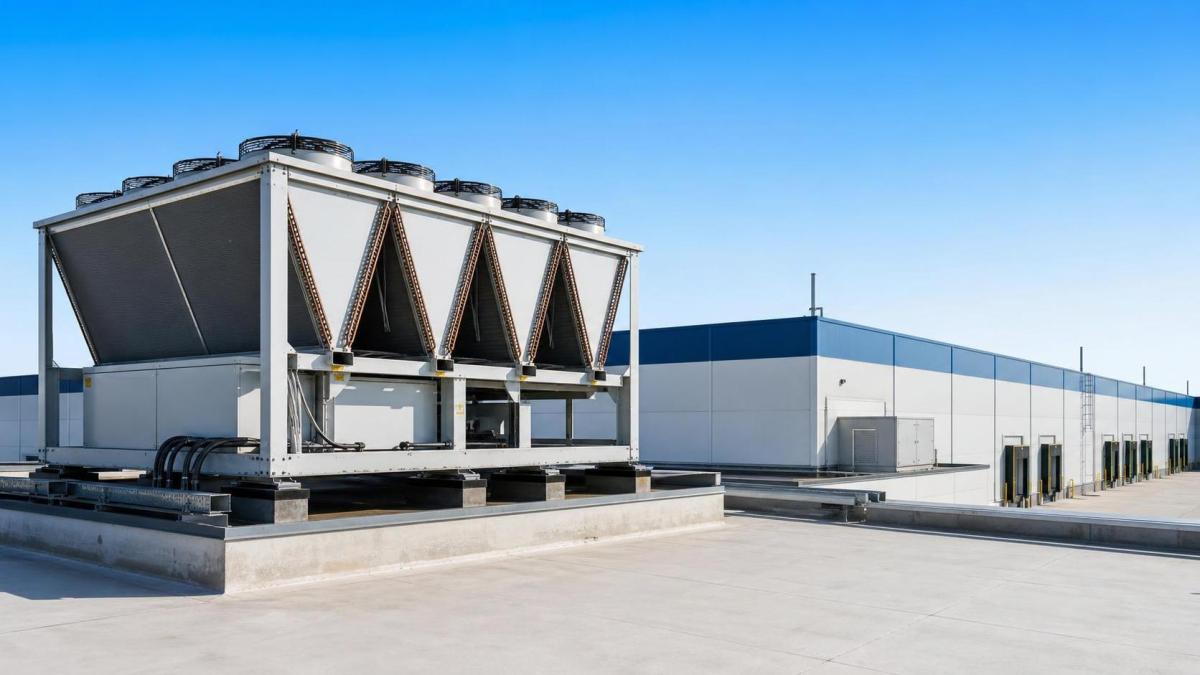
When large refrigeration loads are involved, the condenser choice stops being a catalog exercise. It affects pull-down speed, head pressure stability, summer reliability, service access, and power cost over the life of the system. A V-Type Condenser tends to make more sense when the project needs high heat rejection in a limited footprint, especially in commercial cold storage and industrial-style applications where roof or yard space is valuable.
The practical question is not whether a V-type design is “better” in general. It is whether your site conditions, operating pattern, and maintenance reality actually justify it. That is the check worth doing before you sign off on equipment.
What to check before choosing a V-Type Condenser
Use this list the way engineers and buyers usually do in real projects: screen the load first, then the installation space, then the seasonal risk, then the service burden.
- Check whether the load is consistently high, not just occasionally peaky. A V-Type Condenser earns its place when the system spends long hours under meaningful load. Large cold rooms, logistics warehouses, central kitchens, food factories, and supermarket back-end storage are typical examples. If the load only spikes for short periods, a larger condenser layout may look attractive on paper but pay back slowly in actual operation.
- Look at ambient conditions during the worst month, not the annual average. The right question is how the condenser behaves when summer temperature is high and airflow around the unit is less than ideal. This is where extra heat exchange surface and better air-side arrangement matter. Decision-makers often underestimate this point and then wonder why power draw rises and head pressure gets unstable exactly when the site is busiest.
- Measure available installation area carefully. V-type designs are often selected because they deliver strong capacity without demanding a sprawling layout. That helps on rooftops, mechanical yards, or projects where other utilities already compete for space. Still, compact does not mean squeeze it anywhere. You need enough clearance for inlet and discharge airflow, coil cleaning, and fan service. A good footprint loses its value quickly if the unit is boxed in by walls, pipe racks, or parapets.
- Check your airflow path, not just your fan count. Recirculated hot air is one of the quiet reasons large condensers underperform. If the site pushes discharge air back into the coil face, capacity drops and condensing temperature climbs. On a V-Type Condenser, this is usually manageable, but only if placement is reviewed early. Ask for the actual layout drawing and confirm service aisles, discharge direction, and nearby obstructions.
- Match the condenser choice to your control strategy. A large refrigeration system that sees different seasonal conditions needs stable condensing pressure control. Summer capacity matters, but winter stability matters too. If your project operates year-round, the condenser should be reviewed together with fan control logic, pressure regulation, and defrost rhythm across the full operating range.
This is also why integrated system thinking matters. In cold storage work, the condenser is rarely acting alone. For example, when an application uses a packaged solution such as Integrated Cold Storage Cold Source , buyers should not only look at nominal cooling support. They should also check how the system handles installation complexity, pressure control, defrosting method, and on-site piping workload, because those factors affect whether the condenser advantage is fully realized in the field.
Where the V-type layout usually makes the strongest business case
Some projects clearly benefit more than others. If your team is evaluating options for large refrigeration loads, these are the conditions that usually tilt the decision toward a V-type arrangement.
On the other hand, if the project is small, lightly loaded, or installed in a location with generous space and mild ambient conditions, the V-type option may be more equipment than the site really needs. In that case, a simpler configuration may be easier to maintain and more economical upfront.
Mistakes that cause bad selections
Most poor choices happen before the equipment arrives. A few patterns come up again and again:
- Choosing by nominal capacity alone. Capacity without site temperature, airflow path, and operating hours is not enough for a serious decision.
- Ignoring maintenance access. Large condensers still need cleaning, fan inspection, and coil service. If technicians cannot reach the unit safely, operating cost goes up later.
- Separating condenser selection from the rest of the cold room package. In real installations, mismatched field assembly and control details can create low efficiency and nuisance faults even when the main hardware looks adequate.
- Overlooking seasonal control devices. A system that performs well in summer but becomes unstable in winter has not been selected properly.
That last point is worth slowing down for. Some integrated cold storage packages are designed to reduce field errors by standardizing major components and simplifying on-site connections. If you are reviewing a system for medium-to-large cold storage, details such as electric heating defrosting, remote IoT monitoring, and condensing pressure control should be checked as part of the full operating plan, not treated as optional extras. In a model such as WG8-9, even basics like voltage, refrigerant selection, and application temperature range matter because they determine whether the solution fits your facility rather than simply fitting the drawing.
A short decision sequence that works in practice
- Confirm the real operating load and how many hours per day it stays high.
- Review the worst ambient conditions the condenser will face.
- Check footprint, airflow clearance, and maintenance access on the actual site layout.
- Verify how condensing pressure will be controlled across summer and winter.
- Evaluate whether a more integrated cold storage solution reduces installation risk enough to justify the package choice.
If those five points line up, a V-Type Condenser is usually the stronger choice for large refrigeration loads. If two or three of them do not, stop and recheck the design before moving to procurement. That pause is often cheaper than correcting a marginal condenser decision after the cold room is already in operation.
CHAIDONG
Professional generator set manufacturer
24/7 before-sales and after-sales services
Comprehensive technical support