






Where an H-Type Condenser 402CD Fits in Medium Cold Storage Projects
Where an H-Type Condenser 402CD Fits in Medium Cold Storage Projects
In medium cold storage projects, choosing the right heat-exchange equipment directly affects system efficiency, stability, and operating costs. The H-Type Condenser 402CD is often considered for applications that require reliable condensation performance, space-conscious design, and long-term durability. For buyers comparing refrigeration solutions, understanding where this model fits can help narrow options and support smarter project planning.
The first thing to clarify is that a model name like H-Type Condenser 402CD does not tell the whole story by itself. In refrigeration practice, a condenser is never selected as an isolated component. It has to match the condensing unit, refrigerant conditions, ambient temperature, airflow arrangement, pipe routing, and the actual load profile of the cold room. That is why experienced engineers rarely ask whether a condenser is “good” in general. They ask where it fits, what duty it can handle, and what operating margin it leaves in summer conditions or under frequent door opening.
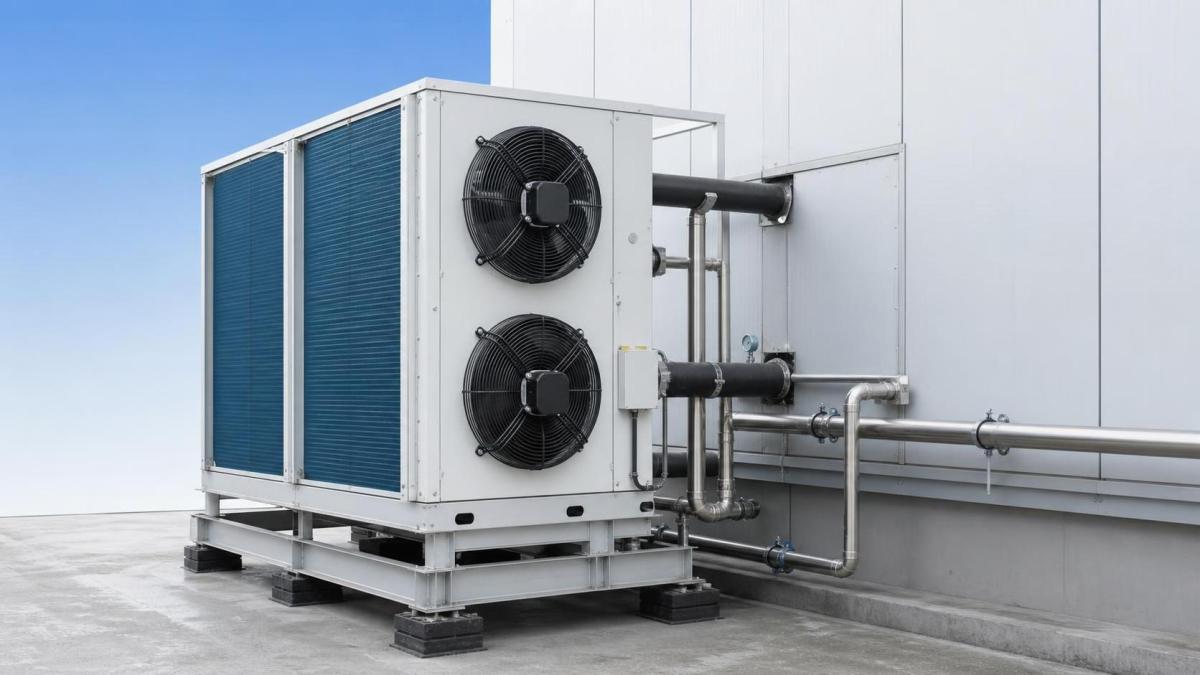
An H-type condenser usually refers to a structural layout in which the coil and fan arrangement are designed for balanced air distribution and practical installation. In medium cold storage work, this matters because the project is often large enough to demand steady condensing performance, but not so large that a highly customized industrial heat rejection system is necessary. That puts models such as the H-Type Condenser 402CD in a useful middle zone: more robust than the light-duty equipment often seen in small walk-in applications, but still compact enough for commercial and distribution-oriented cold rooms.
Where does that middle zone show up in real business terms? Commonly in facilities serving food retail, food processing support, regional distribution, and mixed-temperature storage. A medium cold storage project might not run at the same scale as a logistics hub, yet it still faces a demanding daily rhythm: repeated loading cycles, varying outdoor temperatures, extended operating hours, and pressure to keep energy use under control. In those conditions, the condenser is not just rejecting heat. It is setting the operating tone for the whole refrigeration system.
That is also where people sometimes misread the role of the 402CD. They assume model selection is mostly about nominal capacity. In fact, capacity without context can mislead. A condenser that looks adequate on paper may struggle if the installation site has poor ventilation, high summer ambient temperatures, or an oversized load caused by traffic and infiltration. On the other hand, an oversized condenser can add cost and space pressure without delivering a meaningful return if the system load is moderate and stable. The useful question is whether the condenser can hold condensing temperatures within a sensible operating range across the project’s real seasonal conditions.
Why It Often Matches Medium Cold Rooms
Medium cold storage projects tend to need three things at once: stable heat rejection, manageable installation footprint, and serviceability. That combination is exactly why H-type designs remain common in commercial refrigeration equipment portfolios. When properly matched, the H-Type Condenser 402CD can support chilled or frozen storage systems where runtime is substantial, but the owner still needs practical equipment selection rather than a fully engineered one-off platform.
This is especially relevant in projects connected to display-driven retail cold rooms. For example, a store or wholesaler using a Display Cold Room is dealing with more than storage temperature alone. Glass display access, customer visibility, and frequent front-end door activity all increase the importance of refrigeration stability. If the cold room has a rear replenishment aisle and separate stocking access, the operational pattern becomes more controlled, but the condensing side still needs enough reserve to handle repeated thermal disturbance. In other words, the condenser choice affects whether the room merely reaches set temperature or maintains it cleanly during business hours.
For this kind of application, the cold room temperature range may vary widely. Chiller operation can sit around 0°C to +10°C, while freezer operation may run around -18°C to -22°C, depending on the product and room design. That does not mean one condenser suits every version automatically. It means the condenser must be judged against the full refrigeration package, including compressor selection and design condensing temperature. The H-Type Condenser 402CD is best understood as a candidate within that matching exercise, not a universal answer.
What Buyers Should Actually Check
When people are still at the information-gathering stage, they often focus on the easiest visible points: coil size, fan count, or model code. Those matter, but they are only part of the picture. A more useful screening approach is to ask:
- What room temperature and product load is the project designed for?
- What ambient design temperature should the condenser handle?
- Is the project a chiller, freezer, or mixed-use cold room?
- How restricted is the installation space and airflow path?
- How easy will coil cleaning and fan maintenance be after commissioning?
Those questions are more practical than chasing a model number in isolation. In many medium-sized projects, failure to allow for maintenance access causes more trouble than the initial thermal selection. Dust buildup, blocked airflow, and poor placement near walls or other equipment can erode real-world performance even when the original sizing was reasonable.
Manufacturing quality also matters more than some buyers expect. A condenser is a straightforward product in principle, but long-term reliability depends on tube expansion quality, fin alignment, leak resistance, pressure integrity, and consistent production control. This is where established manufacturers tend to differentiate themselves quietly rather than theatrically. Shandong Boer Refrigeration Equipment Co., Ltd., for example, operates with dedicated production lines, high-precision testing equipment, and a product range built around cold storage systems rather than isolated components alone. That kind of background is relevant because system-level understanding usually leads to more sensible component matching.
What It Is Not Meant to Replace
The H-Type Condenser 402CD is not best viewed as the answer to every refrigeration scenario. Very small cold rooms may not need this class of condenser at all, especially where load is light and installation simplicity is the top priority. At the other extreme, large industrial cold stores, heavy processing environments, or sites with unusual corrosion and ambient demands may require a more specialized condensing arrangement. The point is not to force a model into the wrong project category just because it appears versatile.
Another common misunderstanding is to treat condenser selection as separate from energy consumption strategy. In reality, condensing performance, compressor workload, defrost behavior, and room insulation all interact. A project using high-density insulated panels, controlled access patterns, and a well-planned room layout can ease system stress considerably. In retail-oriented cold rooms with display doors and replenishment separation, that coordination becomes even more visible. Better room design does not eliminate the need for the right condenser, but it changes what “right” looks like.
So where does the H-Type Condenser 402CD fit? In most cases, it belongs in the conversation when a project sits squarely in the medium cold storage range and the buyer needs dependable air-cooled condensation without drifting into oversized industrial hardware. It makes sense where space, uptime, and maintenance practicality all matter, and where the refrigeration package has been matched with actual operating conditions rather than brochure assumptions. That is the level at which this model becomes useful: not as a generic label, but as a well-placed component in a properly designed cold storage system.
CHAIDONG
Professional generator set manufacturer
24/7 before-sales and after-sales services
Comprehensive technical support