






Cold Room Solutions: Types, Design, Equipment, Applications, Cost & Installation
A cold room is a temperature-controlled storage space designed to preserve products that require specific refrigeration conditions. From food and beverages to pharmaceuticals, agricultural products, supermarkets, restaurants, and cold chain logistics, cold rooms provide a reliable way to maintain product quality, extend shelf life, and control storage temperatures.
Choosing the right cold room involves much more than selecting a refrigerated room. Buyers need to consider the room type, storage capacity, operating temperature, insulation, refrigeration system, equipment configuration, installation requirements, energy consumption, and total investment.
This guide explains the key aspects of cold room solutions, from different types and design considerations to refrigeration equipment, industry applications, pricing, installation, and maintenance.
Cold Room Types: A Complete Guide to Different Cold Storage Solutions
Cold rooms are available in different configurations to meet different storage requirements. The appropriate type depends on factors such as product characteristics, required temperature, available space, storage capacity, access frequency, and operating environment.
Walk-In Cold Room
A walk-in cold room provides enough space for workers to enter the refrigerated area and organize or retrieve products. It is widely used by restaurants, supermarkets, food distributors, hotels, and small- to medium-sized food businesses.
Walk-in cold rooms can be customized according to storage capacity, temperature requirements, panel thickness, door configuration, and refrigeration capacity.
Walk-In Freezer Room
A walk-in freezer room is designed for products requiring lower storage temperatures, commonly including frozen meat, seafood, frozen foods, and other temperature-sensitive products.
Compared with standard chilled storage, freezer rooms require stronger insulation and refrigeration systems capable of maintaining low temperatures over extended periods.
Modular Cold Room
Modular cold rooms are assembled from prefabricated insulated panels. Their modular structure makes them suitable for projects where installation speed, flexibility, and future expansion are important.
The panels can generally be configured according to the required room dimensions, while the refrigeration system can be selected based on the room volume and operating temperature.
Containerized Cold Room
A containerized cold room integrates cold storage equipment into a shipping-container structure. It can be useful for temporary storage, remote locations, agricultural operations, logistics facilities, and projects where mobility is important.
Commercial And Industrial Cold Rooms
Commercial cold rooms are commonly used in restaurants, supermarkets, hotels, catering businesses, and food distribution facilities.
Industrial cold rooms are generally designed for larger storage capacities and more demanding operating conditions. They may require larger refrigeration systems, more advanced temperature controls, stronger insulation, and customized storage layouts.
Blast Freezing Room
Blast freezing rooms are designed to rapidly reduce product temperature. They are particularly important for food processing and applications where rapid freezing helps preserve product quality.
Because blast freezing requires high refrigeration capacity and strong airflow management, its design differs significantly from a standard cold storage room.
The selection of a cold room type should therefore begin with the product and operating requirements rather than the physical appearance of the room.
Cold Room Design: A Complete Guide to Size, Temperature, Insulation & Refrigeration
A properly designed cold room needs to maintain the required temperature consistently while minimizing unnecessary energy consumption.
The most important design factors include room dimensions, storage capacity, product characteristics, target temperature, insulation, door configuration, refrigeration capacity, and expected usage frequency.
Cold Room Size And Storage Capacity
Cold room size should be determined by the amount and type of products being stored rather than simply using the available building space.
Important considerations include:
Product quantity
Product dimensions
Pallet configuration
Shelving requirements
Required air circulation space
Loading and unloading areas
Worker access
Future storage requirements
A room that is too small can create loading and airflow problems, while an oversized room may increase construction and operating costs unnecessarily.
Cold Room Temperature
Different products require different storage temperatures. Chilled products may require temperatures above freezing, while frozen products need significantly lower temperatures.
For example, a cold room for fresh vegetables may have completely different temperature requirements from a frozen seafood storage room or pharmaceutical facility.
Therefore, the target product temperature should be determined before selecting the refrigeration equipment.
Cold Room Insulation
Insulation is one of the most important components of a cold room because it reduces heat transfer between the interior and exterior environment.
Common cold room insulation materials include polyurethane (PU) and polyisocyanurate (PIR) panels.
Panel thickness should be selected according to factors such as:
Operating temperature
Local climate
Room size
Refrigeration requirements
Energy efficiency goals
Project budget
Good insulation reduces heat gain and helps the refrigeration system maintain stable temperatures more efficiently.
Cold Room Refrigeration Capacity
The refrigeration system must be properly matched to the cold room.
The required capacity depends on several heat loads, including:
Heat entering through walls, ceiling, and floor
Product heat load
Door opening frequency
Personnel heat
Lighting
Refrigeration equipment heat
Ambient temperature
Incorrect refrigeration sizing can cause unstable temperatures, excessive energy consumption, or unnecessary equipment costs.
For this reason, refrigeration capacity should be calculated according to actual operating conditions rather than selected only according to room volume.
Cold Room Equipment: Complete Guide to Refrigeration Systems & Components
A complete cold room consists of more than insulated panels. The refrigeration system and supporting components work together to remove heat and maintain the required storage temperature.
Typical cold room equipment includes compressors, condensing units, evaporators, condensers, refrigeration controls, temperature sensors, doors, insulated panels, and electrical components.
Cold Room Condensing Unit
The condensing unit is a key part of the refrigeration system. It typically integrates the compressor and condenser with other necessary refrigeration components.
The correct condensing unit depends on:
Required cooling capacity
Refrigerant
Evaporation temperature
Ambient temperature
Operating conditions
Cold room size
Product heat load
Cold Room Evaporator
The evaporator removes heat from the cold room. Air passes across the evaporator coil, where heat is transferred to the refrigerant.
Different evaporator configurations can be selected depending on room size, temperature requirements, airflow requirements, and installation conditions.
Air-Cooled Condenser
An air-cooled condenser rejects heat from the refrigeration system into the surrounding air. Its performance can be affected by ambient temperature, airflow, condenser cleanliness, and equipment installation conditions.
Refrigeration Controls
Temperature controllers, sensors, expansion devices, electrical controls, and other components help regulate the refrigeration system and maintain stable operating conditions.
For commercial and industrial projects, control systems can also be configured to provide alarms, monitoring, defrost control, and other functions.
Cold Room Doors And Panels
Doors and insulated panels are also critical components.
Cold room doors should provide effective sealing while allowing convenient product access. Depending on the application, hinged doors, sliding doors, or specialized freezer doors may be used.
Together, the refrigeration equipment, insulation system, doors, controls, and electrical components form an integrated cold room solution.
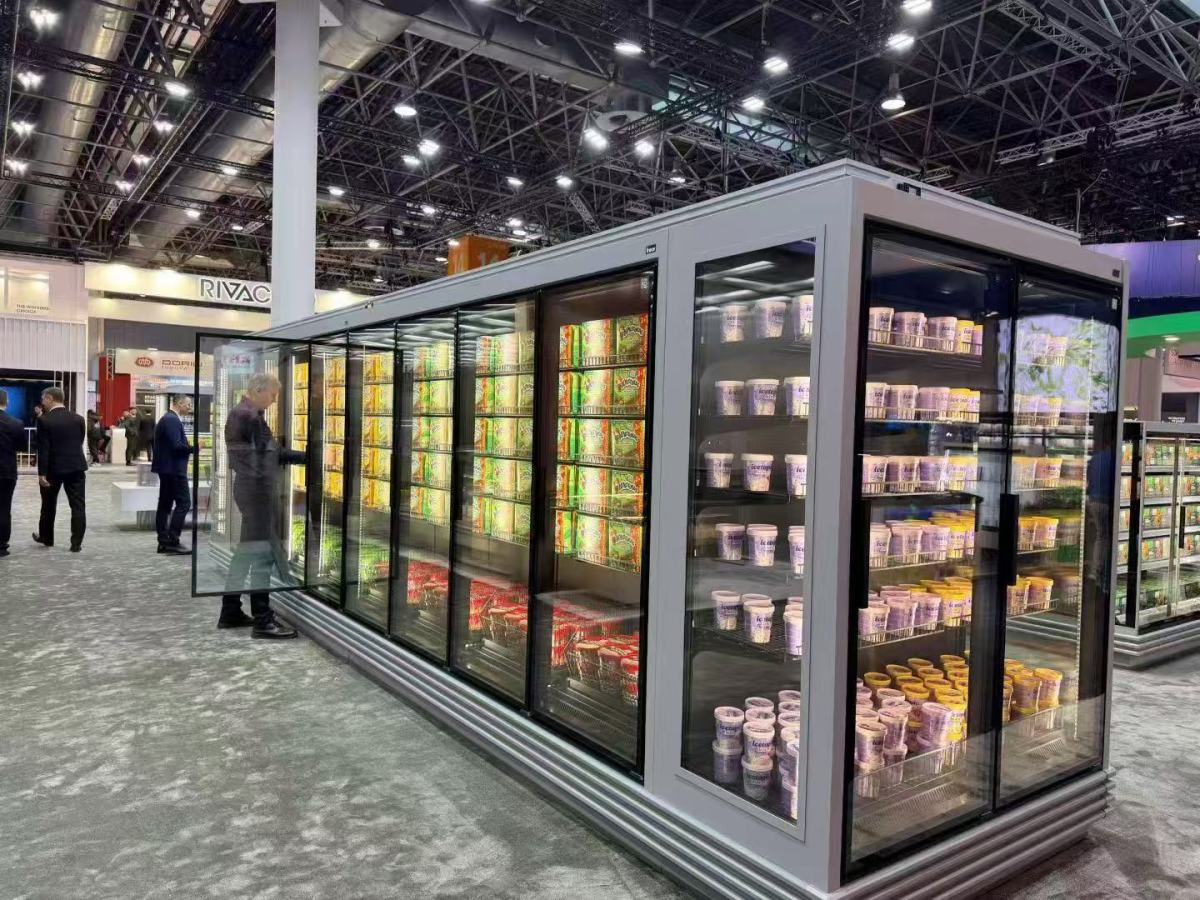
Cold Room Applications: Solutions for Food, Pharmaceutical, Retail & More
Cold rooms serve a wide range of industries. Although the basic refrigeration principle is similar, the design requirements can vary significantly depending on the products being stored.
Food Storage
Food storage is one of the largest applications for cold rooms. Meat, seafood, dairy products, prepared foods, beverages, fruits, and vegetables may all require controlled-temperature storage.
The system should be designed around the specific temperature, humidity, loading, and storage requirements of each product.
Meat And Seafood Storage
Meat and seafood generally require reliable low-temperature storage to maintain quality during distribution and processing.
Cold rooms used in meat and seafood facilities may need frequent door access, high refrigeration capacity, hygienic surfaces, and efficient airflow.
Fruit And Vegetable Storage
Fruits and vegetables often require carefully controlled temperatures and humidity levels. Excessive cooling or poor airflow can negatively affect product quality.
Cold room design for agricultural products should therefore consider product respiration, air circulation, storage duration, and loading patterns.
Pharmaceutical Storage
Pharmaceutical products can have strict temperature requirements. Cold rooms used for pharmaceutical storage may require more precise temperature control, monitoring, alarms, backup systems, and documented operating procedures.
Supermarkets, Restaurants And Hotels
Retail and hospitality businesses often use cold rooms for daily food storage. Their requirements may include compact dimensions, easy product access, frequent door opening, efficient operation, and simple maintenance.
Cold Chain Logistics
Cold chain logistics facilities require temperature-controlled storage throughout distribution and transportation networks.
Large cold rooms and distribution warehouses may use multiple temperature zones, larger refrigeration systems, monitoring systems, and customized loading areas.
The application should always be considered when designing a cold room because the same refrigeration configuration cannot necessarily meet the requirements of every industry.
Cold Room Price & Cost: Complete Guide to Equipment, Installation & Investment
Cold room cost varies considerably from one project to another. There is no single standard price because the total investment depends on the room size, temperature range, insulation, refrigeration equipment, materials, installation conditions, and customization requirements.
What Determines Cold Room Price?
The main cost factors include:
Cold room size – Larger rooms require more panels and greater refrigeration capacity.
Operating temperature – Lower temperatures generally require stronger insulation and refrigeration systems.
Panel thickness and material – Different insulation specifications affect material cost and energy performance.
Refrigeration equipment – Compressor, condensing unit, evaporator, condenser, and controls influence the total system cost.
Cold room door – Door size, configuration, insulation, and operating method can affect the price.
Floor construction – Freezer rooms may require specialized insulated floors.
Installation – Labor, transportation, electrical work, commissioning, and site conditions contribute to project cost.
Customization – Special dimensions, temperature zones, monitoring systems, and other requirements may increase investment.
Small Cold Room Cost vs. Industrial Cold Room Cost
A small commercial cold room may require a relatively simple refrigeration configuration and limited installation work.
An industrial cold storage project can involve multiple rooms, larger refrigeration systems, insulated floors, automated controls, loading areas, monitoring systems, and specialized installation.
Therefore, comparing cold room prices only by room size can be misleading. The total cost should be evaluated based on the complete system and its expected operating requirements.
How To Reduce Cold Room Operating Costs
The initial purchase price is only part of the investment.
Energy efficiency should also be considered. Proper insulation, correctly sized refrigeration equipment, effective door sealing, regular maintenance, and appropriate temperature settings can help reduce long-term operating costs.
A lower-cost system is not necessarily the most economical choice if it consumes significantly more energy throughout its operating life.
Cold Room Installation & Maintenance: Complete Guide to Setup, Care & Troubleshooting
Professional installation is essential for achieving stable temperatures and reliable long-term operation.
The installation process generally involves preparing the site, assembling insulated panels, installing the floor and ceiling, fitting doors, positioning refrigeration equipment, connecting electrical and refrigeration components, and commissioning the system.
Cold Room Installation
Before installation begins, the project should confirm:
Available installation space
Floor condition
Electrical supply
Ventilation around refrigeration equipment
Drainage requirements
Access for equipment installation
Required room dimensions
Target operating temperature
During panel installation, joints should be properly aligned and sealed to minimize air leakage and thermal losses.
The refrigeration system should then be installed according to the equipment specifications and project requirements.
Cold Room Commissioning
After installation, the refrigeration system should be tested before normal operation.
Important checks include:
Temperature stability
Refrigeration system operation
Door sealing
Defrost operation
Drainage
Electrical controls
Refrigerant system performance
Temperature monitoring
Proper commissioning helps identify installation problems before the cold room enters full operation.
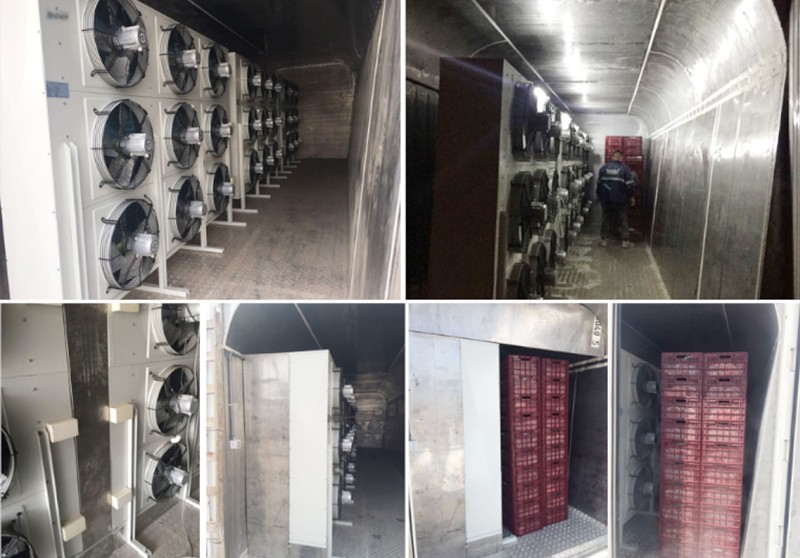
Cold Room Maintenance
Regular maintenance can improve equipment reliability and help maintain energy efficiency.
Recommended maintenance tasks include:
Cleaning condenser coils
Checking evaporator condition
Inspecting door seals
Checking temperature sensors
Inspecting electrical connections
Checking drainage systems
Monitoring refrigerant system performance
Checking abnormal noise or vibration
Reviewing temperature records
Common Cold Room Problems
Common problems may include:
Cold room cannot reach the target temperature
Temperature fluctuates excessively
Excessive frost on the evaporator
High energy consumption
Condenser overheating
Door condensation
Refrigeration system cycling too frequently
These problems can result from incorrect equipment selection, poor insulation, air leakage, insufficient maintenance, blocked airflow, or refrigeration system faults.
Identifying the root cause rather than simply adjusting the temperature controller is important for long-term reliability.
How To Choose The Right Cold Room Solution
Selecting a cold room should follow a structured process.
Step 1: Define The Products
Determine exactly what will be stored and whether the products are fresh, frozen, pharmaceutical, agricultural, or otherwise temperature-sensitive.
Step 2: Determine The Required Temperature
Establish the required storage temperature and whether humidity or other environmental conditions need to be controlled.
Step 3: Calculate Storage Capacity
Estimate the quantity of products, pallet requirements, shelving, loading frequency, and future storage demand.
Step 4: Select The Cold Room Structure
Choose between a modular, walk-in, containerized, commercial, industrial, or specialized cold room according to the project.
Step 5: Select Insulation
Choose suitable panel material and thickness based on temperature, climate, room size, and energy efficiency requirements.
Step 6: Calculate Refrigeration Capacity
The refrigeration system should be selected after considering room dimensions, product load, ambient temperature, door opening frequency, and other heat loads.
Step 7: Consider Installation And Maintenance
The project should also account for installation space, electrical requirements, drainage, equipment access, maintenance, and after-sales support.
Step 8: Compare Total Investment
Instead of comparing equipment prices alone, evaluate the complete project cost together with expected energy consumption, maintenance requirements, service life, and operating reliability.
Cold Room Solutions For Different Project Requirements
A successful cold room project combines the right structure, insulation, refrigeration equipment, controls, and installation method.
For a small restaurant, the priority may be compact design and easy access. For a supermarket, frequent door opening and daily loading may be more important. For a pharmaceutical facility, precise temperature monitoring and reliability may be critical. For an industrial cold storage warehouse, capacity, energy efficiency, refrigeration performance, and system scalability may become the primary considerations.
This is why a cold room should be designed according to the actual application rather than selected as a standard package.
A complete cold room solution should consider the entire lifecycle of the system—from initial design and equipment selection to installation, commissioning, daily operation, maintenance, and future expansion.
Conclusion
Cold rooms are an essential part of modern temperature-controlled storage and cold chain systems. Choosing the right solution requires a comprehensive evaluation of cold room types, design requirements, refrigeration equipment, application conditions, project cost, installation, and maintenance.
Whether the project involves a small commercial walk-in cooler, a freezer room, a food processing facility, a pharmaceutical cold storage system, or a large industrial cold warehouse, the most effective approach is to start with the product and operating requirements and then build the refrigeration solution around them.
By carefully matching room size, temperature, insulation, refrigeration capacity, equipment configuration, and installation conditions, businesses can achieve reliable temperature control while improving product protection and managing long-term operating costs.
CHAIDONG
Professional generator set manufacturer
24/7 before-sales and after-sales services
Comprehensive technical support