






Cold Room Types: A Complete Guide to Different Cold Storage Solutions
Cold rooms are temperature-controlled storage spaces designed to protect products that require specific storage conditions. They are widely used in food processing, agriculture, supermarkets, restaurants, hotels, pharmaceuticals, and cold chain logistics.
Different products and businesses require different cold room configurations. Factors such as storage temperature, room size, product volume, installation location, access frequency, and refrigeration requirements all affect the choice of cold room.
The main cold room types include walk-in cold rooms, freezer rooms, modular cold rooms, containerized cold rooms, commercial cold rooms, industrial cold rooms, and blast freezing rooms. Understanding the differences between them can help buyers select the right solution for their project.
Walk-In Cold Room: Types, Features, Sizes & Applications
A walk-in cold room is designed to allow people to enter the refrigerated storage area. It is one of the most widely used cold room solutions for commercial and medium-scale storage.
Walk-in cold rooms can be customized in different sizes and temperature ranges. Depending on the application, they can be used for chilled food, meat, seafood, dairy products, fruits, vegetables, beverages, and other temperature-sensitive products.
The main factors to consider include storage capacity, room dimensions, temperature requirements, insulation, door configuration, and refrigeration capacity.
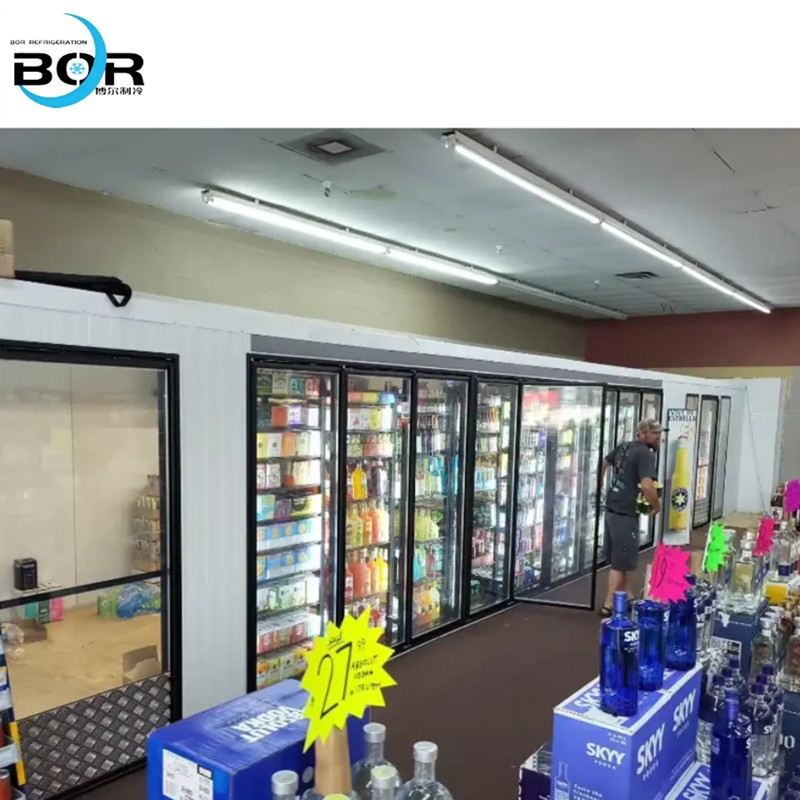
Walk-In Freezer Room: Design, Temperature & Equipment Guide
A walk-in freezer room is designed for products that need to be stored below freezing temperatures. It is commonly used for frozen meat, seafood, frozen foods, and other products requiring low-temperature storage.
Compared with a standard chilled cold room, a freezer room requires stronger insulation and refrigeration performance.
The design should consider the required temperature, product loading temperature, door opening frequency, panel thickness, floor insulation, defrost requirements, and refrigeration capacity.
Modular Cold Room: Benefits, Applications & Installation Guide
A modular cold room uses prefabricated insulated panels that are assembled on site. This construction method provides flexibility in room dimensions and can simplify installation.
Modular cold rooms are suitable for restaurants, hotels, supermarkets, food processing facilities, agricultural storage, and other applications.
Their main advantages include flexible sizing, relatively fast installation, customization, and the ability to adapt the room layout to different storage requirements.
Containerized Cold Room: Design, Features & Applications
A containerized cold room combines a container-based structure with insulated panels and refrigeration equipment. It can be a practical solution where mobility, rapid deployment, or remote installation is required.
These cold rooms can be used for agricultural storage, food distribution, temporary cold storage, cold chain logistics, and remote projects.
When selecting a containerized solution, buyers should consider transportation, available electrical power, site conditions, storage capacity, and required operating temperature
Commercial Cold Room: Solutions For Restaurants, Hotels & Retail
Commercial cold rooms are designed for businesses that need reliable daily refrigerated storage without the scale of a large industrial warehouse.
Restaurants, hotels, supermarkets, catering businesses, and food retailers are common users.
Commercial cold rooms typically prioritize compact design, easy product access, stable temperature control, efficient insulation, and convenient maintenance. Frequent door opening should also be considered when selecting the refrigeration capacity.
Industrial Cold Room: Design, Capacity & Refrigeration Systems
Industrial cold rooms are designed for high-capacity storage and demanding operating conditions. They are commonly used in food processing plants, distribution centers, meat and seafood facilities, agricultural businesses, and cold chain logistics.
Industrial systems may include larger insulated rooms, multiple evaporators, larger refrigeration systems, temperature monitoring, specialized loading areas, and multiple temperature zones.
Capacity should be determined according to product volume, pallet requirements, storage layout, temperature, loading frequency, and future expansion.
Blast Freezing Room: Design, Temperature & Refrigeration Requirements
A blast freezing room is designed to rapidly reduce the temperature of products rather than simply maintain an already frozen product.
It is commonly used in food processing, meat, seafood, and other applications where rapid freezing is important for product quality.
Blast freezing systems require strong refrigeration capacity and effective airflow. The design should consider product type, product entry temperature, target temperature, required freezing time, loading density, insulation, and evaporator configuration.
How To Choose The Right Cold Room Type
Choosing the right cold room starts with understanding the actual storage requirements.
Product Requirements
First identify what products will be stored. Fresh vegetables, frozen meat, seafood, dairy products, pharmaceuticals, and beverages may require different conditions.
Temperature Requirements
Determine whether the project requires chilled storage, frozen storage, or rapid freezing. The required temperature directly affects insulation and refrigeration equipment.
Storage Capacity
Consider the amount of products, pallet positions, shelving, loading frequency, and expected future growth.
Available Space
The installation site can determine whether a modular, walk-in, containerized, commercial, or industrial solution is most appropriate.
Refrigeration Requirements
The refrigeration system should be matched to the room size, product heat load, ambient temperature, door opening frequency, and target operating temperature.
Installation And Maintenance
Consider installation conditions, electrical requirements, drainage, equipment access, maintenance, and future replacement of components before selecting the final configuration.
Cold Room Types Comparison
Conclusion
Cold room types vary according to structure, temperature, capacity, application, and refrigeration requirements. Walk-in and commercial cold rooms are commonly used for daily business storage, while modular and containerized solutions provide greater flexibility. Industrial cold rooms are designed for high-capacity operations, and blast freezing rooms are specialized for rapid product cooling.
The best cold room should be selected according to the products being stored, required temperature, storage capacity, available space, refrigeration requirements, and long-term operating needs.
By understanding these differences before purchasing, businesses can choose a cold storage solution that provides reliable temperature control, appropriate capacity, and efficient operation
CHAIDONG
Professional generator set manufacturer
24/7 before-sales and after-sales services
Comprehensive technical support