






Display Cold Room Hygiene Standards That Matter in Food Retail Projects
What Hygiene Standards Really Mean in a Display Cold Room
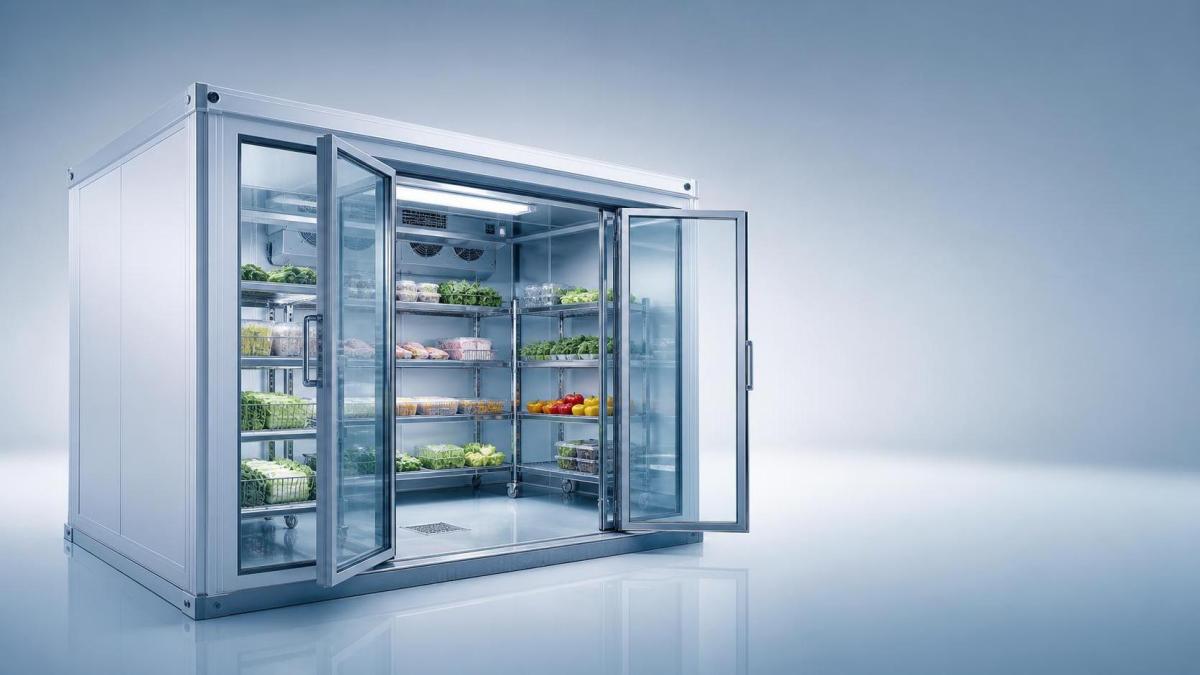
In food retail projects, hygiene in a Display Cold Room is often misunderstood as a cleaning issue alone. It is not. A room can look clean and still create conditions for microbial growth, drip contamination, odor transfer, or repeated non-conformities during inspection. In practice, hygiene standards begin with the room’s physical design: surfaces that can be washed without trapping residue, joints that do not absorb moisture, airflow that does not create dead corners, and temperature control that keeps product zones consistently within the intended range.
That distinction matters because retail cold rooms are not sealed laboratory spaces. Doors open frequently. Staff move goods in and out. Mixed packaging enters from different suppliers. Some rooms are used for drinks, some for dairy, some for meat or prepared foods, and each category changes the hygiene burden. A display installation also has a customer-facing role, so operators sometimes prioritize visibility and merchandising over washability. That is usually where problems start.
The Standard Is Built Into Materials and Details
When quality or safety teams evaluate a cold room, the first question should not be “How cold does it get?” but “Can this structure stay hygienic after months of real use?” Food-contact rules may vary by product and jurisdiction, yet the design logic is broadly consistent. Internal surfaces should be smooth, corrosion-resistant, non-shedding, and easy to sanitize. Panel joints, floor-wall transitions, door frames, and drain areas deserve more attention than large flat surfaces because those are the places where dirt, condensate, and biofilm tend to accumulate.
Prefabricated modular rooms with polyurethane sandwich panels are common because they support thermal performance and fast installation, but hygiene depends on execution. Poorly sealed joints, damaged metal skins, uneven floor transitions, or incompatible sealants can undermine a room that looks compliant on paper. In retail environments, even small construction defects become recurring sanitation points because staff rarely have time for deep cleaning around awkward edges every day.
This is one reason experienced manufacturers pay close attention to production control. Shandong Boer Refrigeration Equipment Co., Ltd., for example, builds commercial refrigeration equipment and modular cold storage systems under standardized manufacturing workflows and a documented quality assurance system, with certifications such as CE, CB, FCC, LVD, EMC, ISO9001, UL, and CQC Energy Conservation across major product lines. Those certifications do not by themselves prove hygienic suitability for every food application, but they do indicate a more disciplined manufacturing baseline, which matters when tolerances, insulation integrity, and component consistency affect cleanability and condensate control.
Temperature Uniformity Is a Hygiene Issue
A common mistake is to separate refrigeration performance from hygiene management. In a display room, they are linked. If air distribution is uneven, some shelves or corners may spend too long above the intended holding temperature, especially during restocking or heavy customer traffic. That does not always trigger an obvious alarm, yet it can shorten shelf life, increase moisture on packaging, and create favorable conditions for spoilage organisms.
For that reason, hygiene standards in real projects usually include temperature mapping, defrost assessment, and condensate drainage checks. A room that repeatedly forms water near the evaporator discharge, on door thresholds, or under product racks is not just inconvenient; it is signaling a hygiene weakness. Water plus organic debris becomes a maintenance problem first, then a compliance problem.
System selection influences this more than many retail buyers expect. In low-temperature applications, a condensing unit that maintains stable operating pressure and reduces flash gas before the expansion valve can help the room recover more predictably after door openings. One example is the Piston-type Condensing Unit, built around a Bitzer 4TSE-9Y reciprocating compressor and a suction-line heat exchanger gas-liquid separator. Features like head pressure control in winter and a piping layout that reduces vibration are not hygiene features in the narrow sense, but they support steadier refrigeration behavior, which reduces the risk of hidden warm spots and excess condensate in a retail display environment.
Cleaning Access Matters More Than Cleaning Frequency Claims
Operators often ask how often a Display Cold Room should be cleaned. Frequency matters, but access matters first. If fans, guards, shelving, drain points, and door gaskets cannot be reached without partial dismantling, cleaning schedules tend to drift from procedure to approximation. The result is usually selective cleaning: visible glass and shelves are wiped often, while evaporator zones, corners, and underside surfaces are missed.
A practical hygiene review should look at four things:
- Whether all internal surfaces are accessible for routine washing and periodic deep sanitation.
- Whether condensate can drain fully without standing water.
- Whether door seals, handles, and thresholds can be cleaned without leaving residue in crevices.
- Whether airflow components stay serviceable without contaminating stored product during maintenance.
This is also where material compatibility becomes important. Cleaning chemicals used in food retail can degrade certain coatings, sealants, or plastics over time. A room may pass installation inspection and still deteriorate under daily sanitation routines. That is why quality teams should ask not only for panel and door specifications, but also for cleaning and maintenance compatibility guidance.
Where Compliance Usually Gets Misread
There is no single universal “display cold room hygiene certificate” that resolves every food retail requirement. Compliance is usually assembled from several layers: equipment safety certifications, manufacturing quality systems, food premises rules, temperature control procedures, and site-specific sanitation programs. Problems arise when buyers assume that a certified refrigeration component automatically means the installed room meets all hygiene expectations.
Another frequent misunderstanding is to focus only on nominal temperature range. A system may be rated for chilled or low-temperature use, but hygiene performance depends on defrost strategy, door-opening patterns, stock rotation, loading density, and whether raw and ready-to-eat products share the same environment. In some stores, the risk comes less from refrigeration hardware and more from mixed-use operation that was never reflected in the original design brief.
For safety managers, the better question is not “Is this room compliant?” in the abstract. It is “What are the contamination pathways in this room, and how does the design reduce them?” That framing leads to more useful acceptance criteria: washable surfaces, thermal consistency, moisture control, serviceability, and documented maintenance routines.
A Better Way to Judge a Project
When planning or upgrading a display installation, it helps to treat hygiene as an operating condition engineered into the room, not a cleaning task added after handover. Review the panel system, door structure, drain design, refrigeration stability, and cleaning access as one package. Ask where condensation might persist, where residue might hide, and how temperature actually behaves during busy trading hours rather than under empty-room test conditions.
Manufacturers with long experience in commercial refrigeration usually understand this interaction better than vendors who present the room as a set of isolated components. Over more than a decade in refrigeration, companies serving export and domestic markets have learned that reliable hygiene performance comes from disciplined fabrication, correct component matching, and realistic use-case design. Even a technically solid unit such as a Piston-type Condensing Unit only delivers its value when the rest of the cold room is designed to avoid moisture traps, support cleaning, and maintain stable product temperatures.
For food retail projects, that is the standard that matters: not a checklist item in isolation, but a room that remains hygienic under daily load, repeated access, and inspection-level scrutiny.
CHAIDONG
Professional generator set manufacturer
24/7 before-sales and after-sales services
Comprehensive technical support