






Refrigeration Equipment Market Trends: What Distributors Should Watch This Year
Refrigeration Equipment Market Trends: What Distributors Should Watch This Year
The Refrigeration Equipment market is no longer moving on price and availability alone. This year, the stronger signal is specification discipline. End users in food processing, cold chain logistics, retail cold storage, and industrial facilities are asking more detailed questions before they place orders: energy consumption under real operating conditions, refrigerant compatibility, certification status, shell durability, defrost performance, and serviceability after installation. For distributors, that changes the job. It is less about pushing broad inventory and more about matching applications with equipment that can hold up under tighter operating expectations.
One reason is simple: electricity costs remain a board-level issue for many cold storage operators, even where power prices have stabilized. A system that looks acceptable on initial purchase cost can become difficult to defend if it creates higher fan power demand, inconsistent temperature pull-down, or more frequent maintenance. That is why energy efficiency is being discussed in a more practical way now. Buyers are not only asking for “energy-saving” equipment in general terms. They increasingly want to know how coil design, air volume, refrigerant circuit layout, and defrost method affect daily operating cost and product safety.
This is also where distributors can see a split developing in demand. Lower-end procurement still exists, especially in highly price-sensitive projects, but repeat buyers tend to become less tolerant of underperforming units. In markets where replacement cycles are shortening, unreliable equipment creates hidden costs through service calls, downtime, and customer complaints. That pushes many buyers toward manufacturers with stable production processes, documented testing, and recognized certifications rather than the cheapest available offer.
Certification is becoming a sales filter, not a paperwork exercise
Certification pressure is rising from several directions at once. Importers and project contractors are paying closer attention to CE, UL, CB, LVD, EMC, ISO9001, and energy-related compliance because certification gaps can delay customs clearance, project approval, or final handover. In some export markets, that scrutiny has become stricter after years of supply chain disruption exposed the risks of inconsistent sourcing.
For distributors, this matters because compliance now affects sell-through speed. A product line with complete documentation and consistent manufacturing records is easier to move across borders and easier to present to engineering customers. It also reduces friction with consultants who want traceability. Companies with a real quality system behind their product range are better positioned here. Manufacturers that combine modern production lines with high-precision testing and controlled workflows are not just advertising reliability; they are reducing the probability of field problems that damage channel relationships later.
That shift is especially relevant in commercial and industrial refrigeration, where failure carries operational consequences. In these applications, certification and quality control are increasingly tied to risk management rather than branding.
Modular cold rooms are winning because projects need speed and flexibility
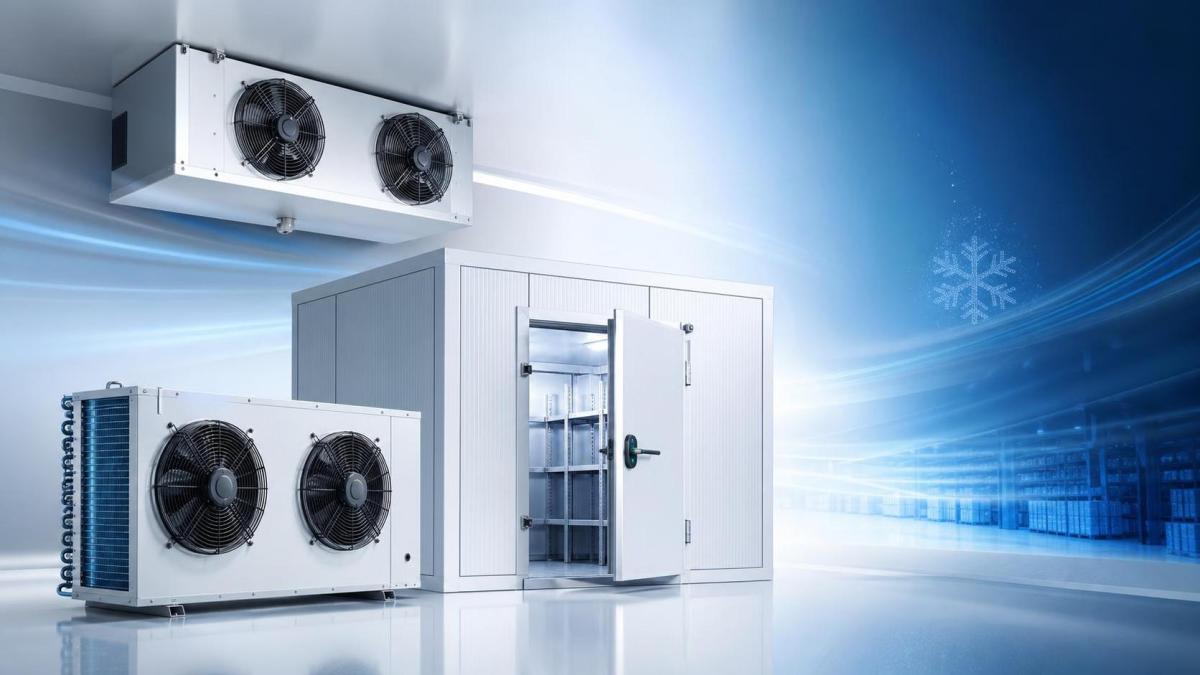
Another trend worth watching is the steady preference for modular cold storage systems. This is not a surprising development, but the reasons behind it are becoming more concrete. Food distributors, processors, and regional logistics operators are expanding in smaller phases. They often need faster installation, predictable site work, and the option to scale capacity later without redesigning the whole facility. Prefabricated modular cold rooms and polyurethane sandwich panel systems fit that requirement well.
Distributors who understand this shift are broadening their offer from single equipment items to more complete cold storage packages. The advantage is commercial as much as technical. A one-stop supply model gives buyers fewer interface problems between evaporators, condensing units, panels, and doors. It also makes after-sales support easier to coordinate. Manufacturers that can support both refrigeration equipment and cold room system components are likely to be more valuable partners in this cycle than suppliers focused on isolated SKUs.
In practice, this means channel partners should watch not only which products are selling, but which combinations are selling together. Package demand often reveals the market direction earlier than unit-level data.
Application-specific selection is becoming harder to avoid
A persistent weakness in the market has been oversimplified equipment matching. That is becoming harder to get away with. Different environments now require more careful coil spacing, airflow, housing material, and defrost configuration decisions, particularly in humid processing areas, low-temperature storage, and corrosive industrial conditions. Buyers who have had poor field performance are more likely to ask for details instead of generic capacity claims.
A good example is Industrial Ceiling-mounted Evaporator 453D, which is positioned for demanding sites such as food processing plants, industrial workshops, chemical and pharmaceutical facilities, cold storage warehouses, and large transport equipment. What stands out is not one headline feature but the way the configuration addresses actual operating variation: 5 mm, 7 mm, and 9 mm fin spacing options for different working conditions; IP54 external rotor axial flow fans; corrosion-resistant shell options; and defrost design aimed at more even heating. For a distributor, products like this are useful because they support a more credible technical sales conversation. Instead of selling on nominal cooling alone, the discussion can move to matching airflow, throw distance, ambient conditions, and maintenance realities.
That matters because industrial customers are increasingly aware that the wrong evaporator selection can create downstream problems in humidity control, frost buildup, and temperature uniformity. The market is rewarding distributors who can translate application conditions into equipment choices with fewer compromises.
Supply chain stability still matters, but the conversation has matured
The worst supply shocks may have eased compared with earlier disruption cycles, yet procurement behavior has not returned to old habits. Buyers remember lead-time volatility. Many now prefer suppliers with visible production capacity, standardized manufacturing, and export experience because those factors reduce uncertainty when projects stack up. A refrigeration manufacturer with a 20,000-square-meter production base, automated equipment, and an established domestic and international service network sends a different signal than a trader relying entirely on fragmented outsourcing.
This does not mean global sourcing is becoming less important. It means channel strategy is becoming more selective. Distributors are looking harder at whether a supplier can keep consistency across batches, maintain technical communication, and support repeat orders over time. An 80%+ repurchase rate, while company-reported and not an industry benchmark, is still a useful commercial signal because repeat business in refrigeration usually reflects field performance more than marketing claims.
What to watch in the next few quarters
A few signals deserve close attention. If buyers keep asking for complete documentation earlier in the sales cycle, certification pressure is still building. If more tenders specify modular room components together with refrigeration hardware, integrated system sourcing is strengthening. If engineering customers spend more time discussing fin spacing, fan protection, shell materials, and defrost methods, the market is moving away from generic substitutions and toward application-led procurement.
The broader direction of the Refrigeration Equipment market looks clear enough: more scrutiny on efficiency, more caution around compliance, and more value placed on suppliers who can support complete, reliable cold storage solutions. What is less certain is how fast those preferences will reshape buying behavior in each region. That is why distributors should pay attention not just to order volume, but to the quality of technical questions coming from customers. Those questions usually tell you where the market is heading before the annual sales report does.
CHAIDONG
Professional generator set manufacturer
24/7 before-sales and after-sales services
Comprehensive technical support