






What Maintenance Plan Helps a Display Cold Room Stay Presentable in Stores?
What Maintenance Plan Helps a Display Cold Room Stay Presentable in Stores?
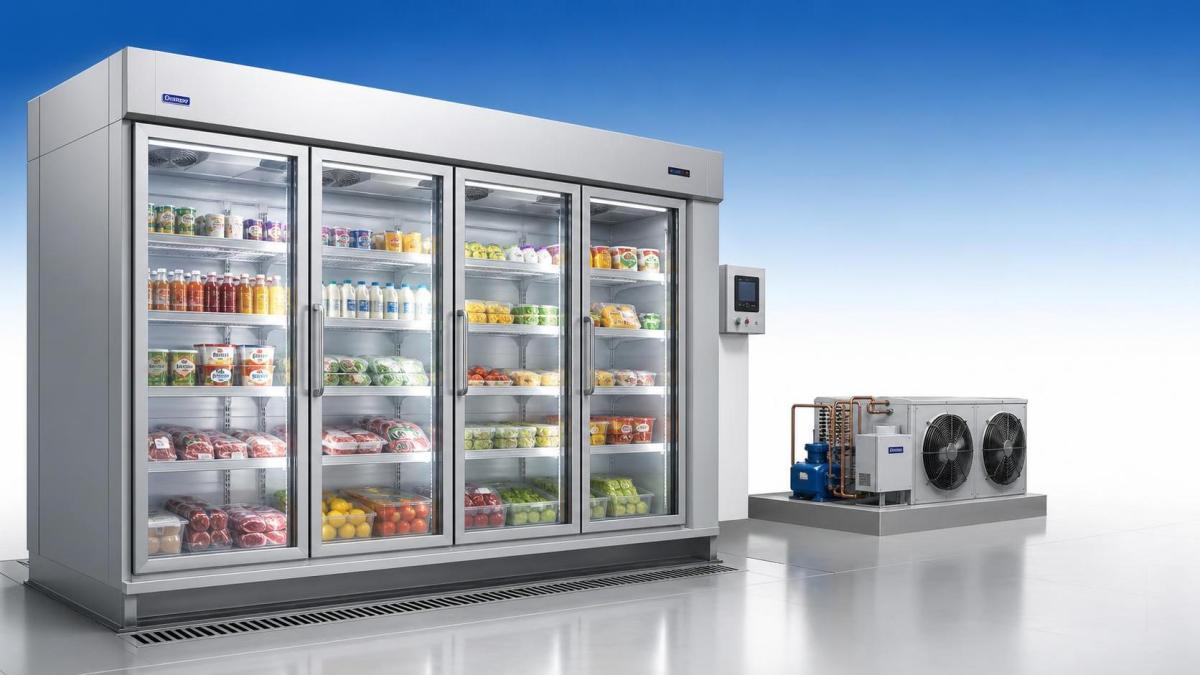
A well-maintained Display Cold Room earns its keep on the sales floor long before anyone checks a thermometer. In grocery stores, fruit shops, butcher counters, dairy sections, and convenience formats, customers judge freshness with their eyes first. If the glass is hazy, the frame is yellowing, the floor drain smells, or frost is gathering around the door, the room starts to look unreliable even when product temperature is still within range. That is why a maintenance plan for a retail-facing cold room cannot be limited to compressor checks and emergency repair calls. It has to protect appearance and operating stability at the same time.
The most common mistake is treating every display room like a back-of-house cold store. They are not maintained under the same conditions. A storage room in a warehouse may tolerate some panel staining, occasional water marks, or a noisy fan motor for a while. A Display Cold Room placed in a busy store does not have that margin. It sits under warm lighting, opens dozens or hundreds of times per day, and is exposed to shopping carts, floor cleaning chemicals, staff shortcuts, and constant humidity exchange. Presentability declines faster there, and the causes are often operational rather than structural.
The maintenance rhythm usually works best when it is split into quick visual routines and deeper technical inspections. Daily work should focus on what customers can see: glass clarity, shelving cleanliness, pooled water, ice at corners, gasket alignment, door closing speed, and internal lighting. Weekly checks can go one layer deeper into drain flow, seal compression, evaporator surface condition, and unusual fan noise. Monthly or quarterly visits are where technicians confirm defrost behavior, refrigerant-side performance, electrical connections, and condenser cleanliness. If those intervals are reversed, appearance problems are often discovered too late, after they have already affected product display and store image.
Door sealing deserves more attention than many store teams give it. On a display room, poor gasket contact rarely shows up as a dramatic failure at first. It usually starts with light condensation around the frame, then streaking on glass, then more frequent frost near the evaporator, and eventually longer compressor run time. Store staff may wipe the glass several times a day without realizing the real cause is air infiltration. For after-sales teams, checking gasket elasticity, hinge sag, self-closing behavior, and threshold alignment is one of the fastest ways to improve both appearance and efficiency.
Drainage is another issue that separates a presentable unit from one that always looks tired. In retail settings, blocked or slow drains are not just a technical nuisance. They leave visible water tracks, stain panel joints, and create odors that customers immediately associate with poor hygiene. The trigger is often simple: food debris, packaging fragments, dust, or cleaning residue entering the drain pan area. A practical plan includes routine flushing of the drain line, inspection of trap condition where applicable, and confirmation that meltwater is leaving the unit without backing up during or after defrost.
Lighting should also be handled as a maintenance item, not just an accessory. In display refrigeration, weak or uneven lighting changes the perceived color of meat, dairy packaging, beverages, and prepared food. Staff sometimes keep operating with one failed lamp because cooling still works, but the merchandising loss is immediate. The same applies to yellowed diffusers and moisture inside light housings. A clean, bright interior makes the room look colder, cleaner, and newer. That visual effect matters in stores where customers compare several chilled displays within seconds.
Where maintenance plans usually fail
They fail when cleaning and refrigeration service are separated too rigidly. Store cleaners may wipe exposed surfaces but ignore panel joints, evaporator guards, and lower frame edges where grime accumulates. Service teams may focus on pressures, current draw, and thermostat settings while overlooking scratches, seal damage, rust spots around fasteners, or impact damage from trolleys. In a Display Cold Room, those details are connected. Damaged panel coating is not only cosmetic; once the surface becomes harder to clean, the room ages visibly much faster.
It also fails when the cooling system is oversized or poorly matched to the store’s usage pattern. In small-to-medium cold storage facilities and commercial food storage applications, stable capacity and low vibration help keep the box looking orderly over time because doors, shelving, and fasteners are subjected to less operating stress. This is one reason some projects prefer compact integrated condensing solutions such as the Spiral Condenser Unit, especially where installation space is tight and service access needs to remain straightforward. A box-type side air outlet arrangement can be easier to place in retail-adjacent layouts, but only if airflow around the unit is kept clear and condenser cleaning is not neglected.
For stores operating in the -10 to +5°C application range, temperature stability is only part of the story. Noise and serviceability matter too. A condensing unit working at acceptable capacity but producing excessive noise can become a store complaint, particularly in smaller formats where the refrigeration plant is close to customer areas. Equipment with low vibration and protection functions for overload, overheating, phase loss, and delayed startup can reduce nuisance faults, but that does not remove the need for scheduled checks on fan condition, coil fouling, and electrical health.
Practical checkpoints that keep the room looking saleable
Customer questions often focus on temperature setpoints, but in store projects the better question is usually: how hard is this room to keep looking clean after six months of traffic? That depends on panel finish, hardware durability, door frequency, cleaning chemistry, and the accessibility of service points. A unit that performs well on paper can still become a maintenance burden if staff need to remove shelving awkwardly to clean corners, or if coil access is poor and condenser dust is allowed to accumulate.
Manufacturers with established production control tend to make a difference here because consistency in panels, doors, electrical assembly, and testing reduces the small fit-and-finish issues that show up later in retail use. Shandong Boer Refrigeration Equipment Co., Ltd. has built its business around commercial refrigeration equipment and cold storage systems, with product lines that cover condensing units, prefabricated cold rooms, polyurethane sandwich panels, air coolers, and doors. For maintenance planning, that kind of system-level background matters because the visible condition of a display room is rarely created by one component alone.
Where service teams get the best results, they set maintenance standards that match the store environment rather than the equipment category alone. A convenience store with constant short door openings needs different inspection priorities from a butcher room with heavy washdown, even if both are using a Display Cold Room. The right plan is the one that catches appearance-related deterioration early: before fogging becomes normal, before gasket leaks turn into ice, and before a drainage issue becomes something customers can smell. That is usually the point where maintenance stops being a cost line and starts protecting the cold room’s real job on the shop floor.
CHAIDONG
Professional generator set manufacturer
24/7 before-sales and after-sales services
Comprehensive technical support