






What Refrigerant System Sizes Commonly Use a V-Type Condenser?
What Refrigerant System Sizes Commonly Use a V-Type Condenser?
A V-Type Condenser is usually not chosen because of a fashionable shape. It is chosen when a refrigeration system has outgrown the practical limits of a simple flat or single-face air-cooled condenser, but still needs an efficient outdoor heat-rejection solution with controlled footprint and steady airflow. That is why the question is less about a single horsepower number and more about where the system sits between compact packaged equipment and larger commercial or industrial refrigeration loads.
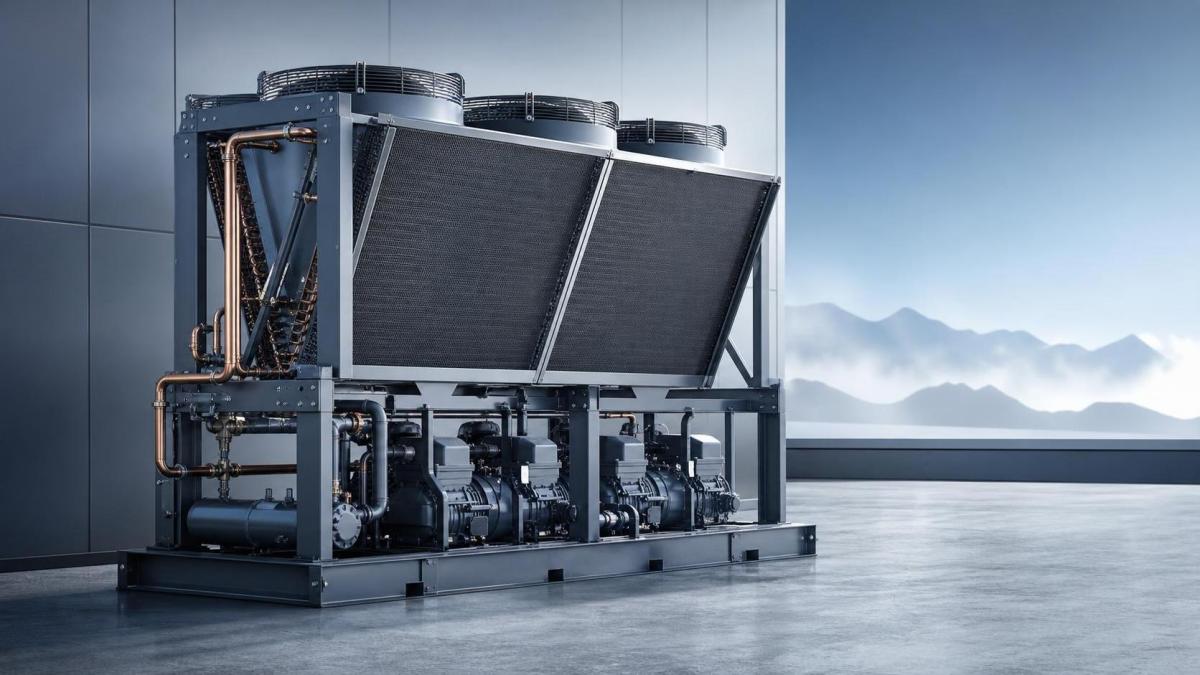
In everyday project language, V-type designs are most commonly associated with medium to relatively large refrigerant systems. The two coil faces form a V, with fans arranged to pull or push air through both sides. This increases heat exchange area without requiring the long ground footprint of a wide horizontal coil bank. For cold room contractors, OEMs, and equipment buyers, that geometry matters when roof space, service access, airflow path, and condensing stability all have to be balanced at the same time.
The short answer is that V-Type Condenser units are commonly used in medium-sized condensing units, parallel rack systems, and larger cold storage refrigeration setups rather than in very small self-contained equipment. Small systems for walk-in coolers, display cases, or plug-in cabinets often use compact finned condensers because the heat load is limited and the structure needs to stay simple. Once the system capacity rises and the condensing side must reject substantially more heat, the V-type layout becomes more attractive.
Where the Size Threshold Usually Changes
There is no universal capacity line that applies to every refrigerant, climate, and product category. A low-temperature freezer room and a medium-temperature processing room can behave very differently even if the compressor power looks similar on paper. Still, in practical selection work, V-type condensers are far more common once the system moves beyond small integral units and into projects that require dedicated outdoor condensing equipment.
That often includes:
- Commercial cold rooms with moderate to high cooling demand
- Multi-door freezer and chiller systems using remote condensing units
- Food processing or logistics cold storage where condensing temperature control affects operating cost
- Applications with multiple evaporators sharing one condensing section
- Projects where installation space is restricted but heat rejection still needs to scale up
In other words, the V-type layout tends to appear when the condenser is no longer a minor accessory but a decisive part of system performance. At that point, fan arrangement, coil face area, and air recirculation risk become design issues rather than afterthoughts.
Why It Is Common in Medium and Larger Systems
The main advantage is density of heat exchange area. A V-Type Condenser can provide a relatively large coil surface in a compact plan area. That helps when a project needs more capacity but cannot simply stretch the condenser length indefinitely. It also improves the equipment’s structural logic: fan motors, service panels, and piping connections can be organized in a way that supports maintenance better than some oversized flat arrangements.
Another reason is airflow behavior. On larger systems, uneven airflow and hot-air recirculation can cause unstable head pressure, especially in high ambient conditions. A V-type structure often supports a more controlled airflow path than a crowded single-plane condenser installation. This does not mean it solves every site problem, but it gives designers more room to manage coil area and fan performance without occupying excessive installation space.
That is also why manufacturers serving cold storage projects often rely on this configuration in the middle and upper parts of their condenser range. Companies such as Shandong Boer Refrigeration Equipment, which work across air coolers, condensers, condensing units, modular cold rooms, sandwich panels, and cold storage doors, see this selection issue in system context rather than as an isolated component choice. In real projects, condenser shape has to match the evaporator load, room volume, ambient design condition, piping distance, and service requirements together.
What People Often Misjudge
A common misunderstanding is that V-type automatically means “large industrial.” Not necessarily. Many medium commercial refrigeration systems use V-type condensers because they offer a sensible compromise between capacity and footprint. Another misunderstanding is the reverse: some buyers assume a condenser can be selected by compressor horsepower alone. That usually leads to trouble. Condenser sizing depends on refrigerant, evaporating temperature, target condensing temperature, ambient air temperature, airflow volume, and system duty.
For example, a low-temperature cold room using R404A at a demanding ambient condition may need a more robust condenser than a medium-temperature application with a similar nominal compressor rating. The heat rejected at the condenser includes not only the evaporator load but also compressor work. That is why “same compressor size” does not always mean “same condenser size.”
When a Smaller Integrated Machine Makes More Sense
There are also many cases where a V-Type Condenser is simply unnecessary. Small cold rooms, especially where installation speed and limited mechanical space matter more than scalable outdoor condensing capacity, often benefit from integrated equipment. A good example is a compact All-in-One Machine built around a factory-assembled refrigeration circuit. In a model such as BOR-LF012P1GC, the compressor, condenser, evaporator, throttling valve, and electrical control system are combined into one package, with 230V/50Hz/1-phase power supply, R404A refrigerant, and wall-mounted or ceiling-mounted installation options.
That kind of unit answers a different project question. Instead of asking how to optimize a larger air-cooled condensing section, the buyer is trying to reduce installation time, avoid field welding, and keep a small low-temperature room running with straightforward maintenance. So the presence or absence of a V-type condenser is not a quality judgment by itself; it reflects system scale, installation method, and project complexity.
How to Judge Fit in a Real Project
If the project is still at concept stage, three questions usually reveal whether a V-Type Condenser is in the likely range.
- Is the system a remote condensing setup rather than a self-contained cabinet or compact monoblock?
- Does the refrigeration load require a larger coil face area to maintain reasonable condensing performance in local ambient conditions?
- Is the available installation space more constrained in width or layout than in vertical volume?
If the answer to most of those is yes, the V-type option becomes more likely. The final decision should still come from proper thermal selection and equipment matching, not from shape preference. Coil material, fin spacing, fan specification, corrosion environment, noise limits, and maintenance clearance all matter. In coastal or dusty environments, for instance, condenser durability and cleaning access can influence the selection as much as nominal capacity does.
So, what refrigerant system sizes commonly use a V-Type Condenser? In practical refrigeration work, it is mainly the medium to larger remote systems where condenser performance, footprint control, and airflow management start to affect the economics and reliability of the project. Very small systems usually do not need it. Very large systems may require it as part of a broader engineered package. The useful way to think about it is not “big or small,” but whether the system load and site conditions have reached the point where condenser geometry materially changes performance.
CHAIDONG
Professional generator set manufacturer
24/7 before-sales and after-sales services
Comprehensive technical support