






What to Check Before Buying a Display Cold Room for Fresh Food Retail
Start with the load, not the look
A display cold room can look clean on a brochure and still be wrong for a fresh food shop. Procurement teams usually feel pressure around price, delivery time, and visual presentation, but the expensive mistakes show up later: uneven temperature, fogged glass, overworked compressors, spoiled produce, and service calls during trading hours.
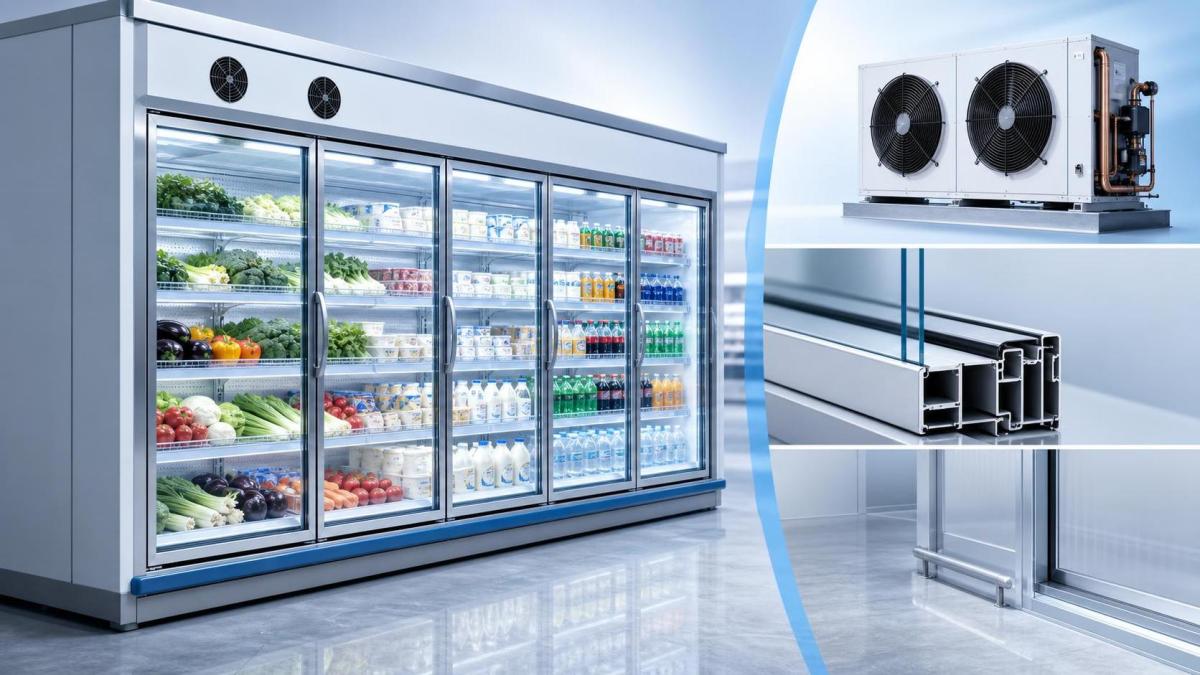
The practical way to buy is to treat a Display Cold Room as a working retail system, not just a box with doors. Before comparing quotations, define what will be stored, how often the doors will open, the target room temperature, store opening hours, and whether the unit is for vegetables, dairy, drinks, meat, or mixed fresh food. Mixed use is where many projects go wrong, because one temperature band rarely suits every category equally well.
Check whether the temperature range matches the merchandise
Do not accept a general claim like “suitable for fresh food.” Ask for the operating temperature range and then compare it with your real SKU mix. Leafy vegetables, dairy, and chilled meat do not behave the same way. If the supplier sizes the room around a broad average, you may end up protecting one product group while shortening the shelf life of another.
Also ask how the room performs during busy periods. A display cold room in retail is not a sealed warehouse room. Door opening frequency, interior lighting, customer browsing, and replenishment all add heat load. A temperature that is stable in a quiet test condition may drift in actual store use.
Look hard at insulation and door structure
This is where operating cost starts. Good insulation is not only about holding temperature; it reduces compressor runtime and helps the system recover faster after each door opening. Ask what panel material is used, how the joints are sealed, and how the door frame handles condensation risk. In fresh food retail, poor door sealing quickly becomes visible as water, frosting, or glass misting.
Pay attention to details that are easy to skip during sourcing:
- Whether the glass doors are designed for frequent opening
- How the threshold and frame are sealed
- Whether the floor structure matches trolley or restocking traffic
- How corners and joints are finished for cleaning and moisture resistance
Do not buy refrigeration capacity by headline horsepower alone
A lot of buyers compare condensing units by compressor brand or nominal power and stop there. That is not enough. You need to check cooling capacity at the evaporation temperature that matches your application, and you need to know the refrigerant, power supply, and noise level if the unit is near the sales floor.
For example, a compact Spiral Condenser Unit used in small-to-medium cold storage or commercial food storage may be rated for a temperature range of -10 to +5°C, with 380V/50Hz/3-phase power, R404A or R507A refrigerant, and cooling capacities that change significantly as evaporation temperature drops. That matters because the same unit that looks adequate on paper at one condition can be undersized once the store asks it to recover quickly after repeated door openings. Procurement should ask for the rating condition behind every capacity figure.
Ask how the system behaves under part load
Retail refrigeration rarely runs at one steady load. Morning pull-down, lunchtime traffic, evening replenishment, and overnight holding all behave differently. A system that only looks efficient at full load may cost more over a year than one with better part-load performance.
That is why it helps to ask about compressor type, protection logic, and control functions. An integrated unit with built-in protection against voltage issues, overload, overheating, phase loss, and delayed startup can reduce nuisance failures. Remote monitoring and fault alarms are also useful if your stores are spread across multiple locations and the maintenance team is lean.
Check hygiene design the way your store staff will experience it
Buyers often focus on refrigeration components and forget the cleaning burden. Fresh food retail is unforgiving here. Water collects. Packaging leaks. Produce debris builds up in corners. If shelves, drain areas, fan guards, or door tracks are awkward to clean, hygiene slips and the room becomes harder to keep presentable.
When reviewing drawings or samples, ask a simple question: what can store staff clean daily without tools, and what needs a technician? If that answer is unclear, expect trouble later.
Review installation limits before signing the PO
Many delays are not equipment failures. They are site mistakes. Measure access paths, floor loading, ventilation space, drainage, and electrical readiness before the order is released. A condensing unit may be compact enough for wall, floor, or roof installation, but that does not mean every site can support it without adjustment. Noise matters too. A unit rated at no more than 65 dB may be acceptable in one back-of-house layout and still be disruptive in another if it sits near customer circulation or a cashier zone.
Compare quotes with a procurement table, not a unit price line
Two offers can look similar and hide very different lifecycle costs. Put the key checkpoints into one sheet before the final comparison.
Read the after-sales promise like a risk document
For procurement, the cheapest purchase can become the most expensive service situation. Ask who supplies spare parts, what the response path is for controls, compressor issues, and door hardware, and whether the supplier has the manufacturing depth and quality systems to support repeatability. Companies with established production lines, testing capability, and recognized product certifications usually give buyers a clearer basis for supplier evaluation than a reseller quote with limited technical backup.
One more thing: get the exact warranty scope in writing. Not just “one year warranty,” but which components are covered, what voids coverage, and who carries labor cost.
Make the final decision in this order
For a fresh food retail Display Cold Room, the cleanest buying sequence is simple. Lock the product temperature requirement first. Then review insulation and door performance. After that, confirm refrigeration capacity at real operating conditions, not marketing labels. Only then compare energy use, cleaning workload, installation constraints, and service terms.
If a quotation is missing those details, it is not ready for approval. In this category, incomplete technical clarity usually turns into operating cost, waste, or downtime. Procurement does better by slowing down the comparison and tightening the checklist before the purchase order goes out.
CHAIDONG
Professional generator set manufacturer
24/7 before-sales and after-sales services
Comprehensive technical support