






When a Quick-Freezing Cold Room Makes Sense for Seafood Processing
Start with the freeze target, not the equipment list
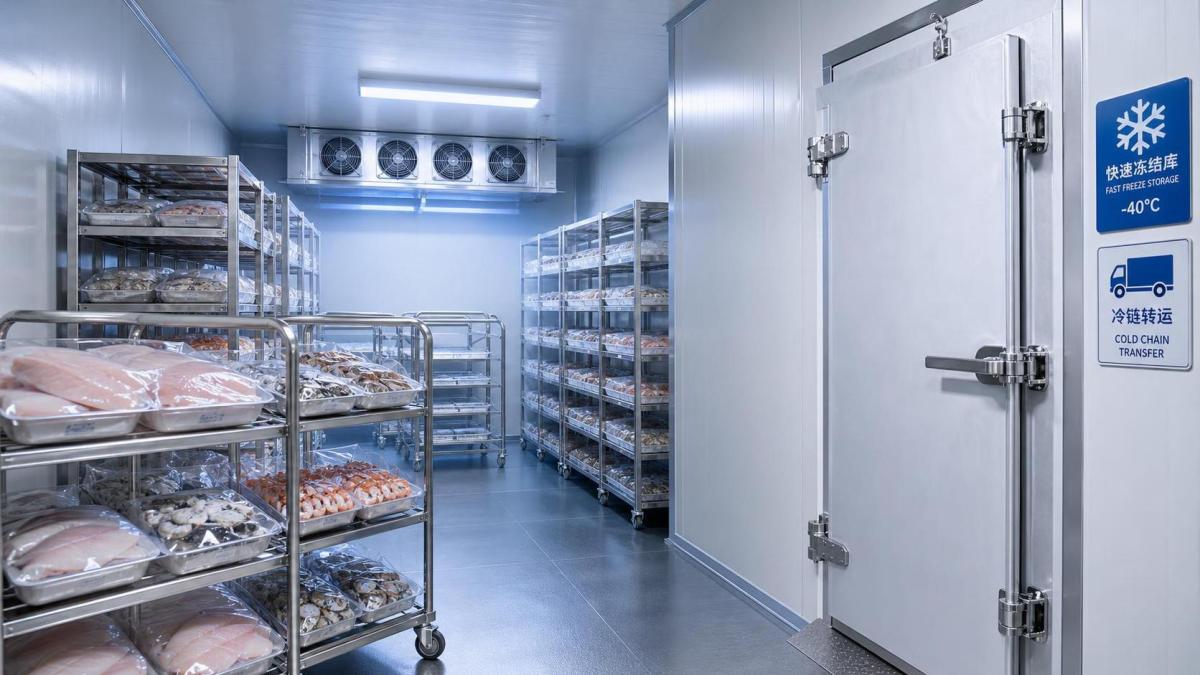
In seafood processing, a quick-freezing cold room earns its place when standard chilled storage or a slow freezer starts damaging yield, texture, or workflow. That usually shows up in very practical ways: shrimp losing drip after thawing, fish fillets developing surface dehydration, or packed product waiting too long between grading and dispatch. If your line is already struggling to keep product temperature down during peak harvest or shift changes, this is the point where a quick-freezing cold room becomes a project decision, not just an equipment upgrade.
For project managers, the real question is not “Do we need freezing capacity?” but “Do we need fast enough freezing to protect product quality and keep the plant moving?” That distinction matters.
Check these conditions before you approve the investment
A quick-freezing cold room makes sense when several of the following are true at the same time, not just one of them in isolation.
- Product is highly sensitive to ice crystal damage. Seafood with delicate muscle structure, high moisture, or premium market positioning usually suffers more from slow freezing. If appearance and thawed texture affect price, freezing speed starts paying back.
- Daily throughput comes in spikes. Many plants do not run at a perfectly even load. Landings, procurement windows, and pre-shipment deadlines create short periods where a lot of product must be stabilized fast. A regular freezer room may have enough theoretical capacity on paper but still fail during those peaks.
- You handle multiple species or pack formats. Whole fish, fillets, shellfish, trays, cartons, and block packs do not behave the same way. The more variation you handle, the more useful it is to have a controlled quick-freezing space instead of stretching one general cold room across every job.
- Export or customer specifications are tightening. In practice, the pressure often comes from documented process control, more consistent core temperature results, and fewer deviations during audits or incoming inspections.
- You are seeing avoidable waiting time between processing and stable frozen storage. That handoff gap is where a lot of quality loss hides.
Map the process bottleneck before sizing anything
One common mistake is sizing the room around total daily tonnage. That is too broad. You need to map the heaviest two or three operating windows: when raw material arrives, how long product waits after trimming or packing, how much enters freezing per hour, and how long it occupies rack or trolley space before transfer out.
If the room fills faster than product can freeze and move out, the project will underperform even if refrigeration capacity looks adequate. If the room is oversized for actual loading patterns, you pay for space and energy you do not use. The useful calculation is peak batch flow, not annual volume.
Look at product form, packaging, and loading density
A quick-freezing cold room works best when loading method is part of the design discussion from day one. Loose trays, stacked cartons, baskets, and palletized goods all change air circulation and freezing time. Some teams buy the right refrigeration package and then bury the benefit under poor loading density.
Check three things on site:
- Whether air can move around the product instead of short-circuiting around the aisle.
- Whether the thickest product unit determines the batch time.
- Whether operators can load consistently during busy shifts without blocking evaporator airflow or door movement.
That last point is often overlooked. In seafood plants, the best layout is usually the one operators can repeat without improvising.
Treat doors and envelope details as production issues
When people discuss a quick-freezing cold room, they often focus on condensing units and evaporators. Fair enough, but daily heat gain and operating discipline are heavily affected by the envelope: panels, joints, traffic flow, and door selection. In seafood processing, frequent entry with trolleys or staff can quietly undermine freezing stability.
For smaller and medium cold room access points, a manually operated insulated hinged door can be a sensible option when traffic is controlled and simplicity matters. For example, Semi-recessed Hinge Door configurations are used in fresh-keeping, refrigeration, and freezer cold rooms, with door leaf insulation formed in high-density polyurethane and an inside one-key escape device. Details like reliable sealing, replaceable gaskets, and appropriate door thickness options such as 100mm, 150mm, or 200mm are not cosmetic choices; they directly affect frost buildup, temperature recovery, and maintenance workload.
Separate freezing duty from storage duty
If your team is still planning to use one room for both fast pull-down and longer-term frozen holding, pause there. In many seafood projects, that mixed-use idea looks economical at first and becomes the source of unstable performance later. Quick freezing and frozen storage are related, but they are not the same duty.
A room designed to remove heat quickly from incoming product needs different operating logic from a room meant to hold already frozen inventory. Once those functions are mixed, door openings increase, occupancy time gets messy, and product rotation becomes harder to control.
Review compliance through documents, not assumptions
For export-oriented or audit-sensitive plants, the question is usually not whether quick freezing sounds better. It is whether the system supports documented process control. Before purchase approval, ask the team to line up the actual documents that matter for your market and customer type: product specification sheets, customer temperature requirements, internal HACCP records, and any contractual freezing or storage conditions already in force.
This is where an experienced refrigeration supplier helps most. A manufacturer with established cold storage system capability, in-house production discipline, and international product certifications across major product lines can usually coordinate the room, door, panel, and unit side more cleanly than a pieced-together procurement approach. The benefit is not marketing language; it is fewer mismatches across the system.
Use this decision table in project meetings
What to settle before procurement starts
Get alignment on five items before asking for final quotations: peak hourly load, product entry temperature, target product form, loading method, and transfer plan after freezing. Without those, price comparisons are usually misleading.
Also decide who owns operating discipline. A quick-freezing cold room can solve the thermal side of the problem, but it will not fix poor staging, uncontrolled door opening, or inconsistent loading practices on its own.
If your seafood line is losing quality during peak handling, or if frozen output is becoming the constraint that slows the rest of the plant, that is the moment to evaluate quick freezing seriously. Start with the bottleneck, verify the loading pattern, separate freezing from storage, and make sure the room envelope is designed for real plant behavior. That sequence usually leads to a much better decision than choosing equipment from a catalog first.
CHAIDONG
Professional generator set manufacturer
24/7 before-sales and after-sales services
Comprehensive technical support